

Every few years, digital marketers wake up to bold headlines declaring the end of search engine optimization. Yet here we are in 2025, and organic search continues to drive billions of visits to websites worldwide. The truth? SEO isn’t dying—it’s simply growing up.
This article explores why claims about the death of SEO are exaggerated, how the practice has matured over time, and what modern optimization looks like for businesses today. Whether you’re a business owner questioning your marketing investments or a marketer navigating the changing landscape, understanding the current state of search optimization has never been more crucial.
The Origin of the “SEO is Dead” Myth
The declaration that SEO is dead has become almost predictable. It resurfaces after every major algorithm update, technological shift, or new platform launch. When Google rolled out Panda in 2011, critics proclaimed the end. The same happened with Penguin in 2012, mobile-first indexing in 2018, and most recently with AI Overviews in 2024.
But here’s what actually happened: black-hat tactics died, not the discipline itself. When Google penalized keyword stuffing, it didn’t eliminate the need for relevant content—it raised the bar. When low-quality link schemes stopped working, it didn’t make backlinks irrelevant—it emphasized relationship-building and genuine authority.
The confusion stems from equating outdated methods with the entire field. Imagine claiming that photography died when film cameras became obsolete. Digital photography didn’t kill the art form; it transformed it. Search engine optimization has followed a similar trajectory, evolving from technical manipulation to strategic visibility.
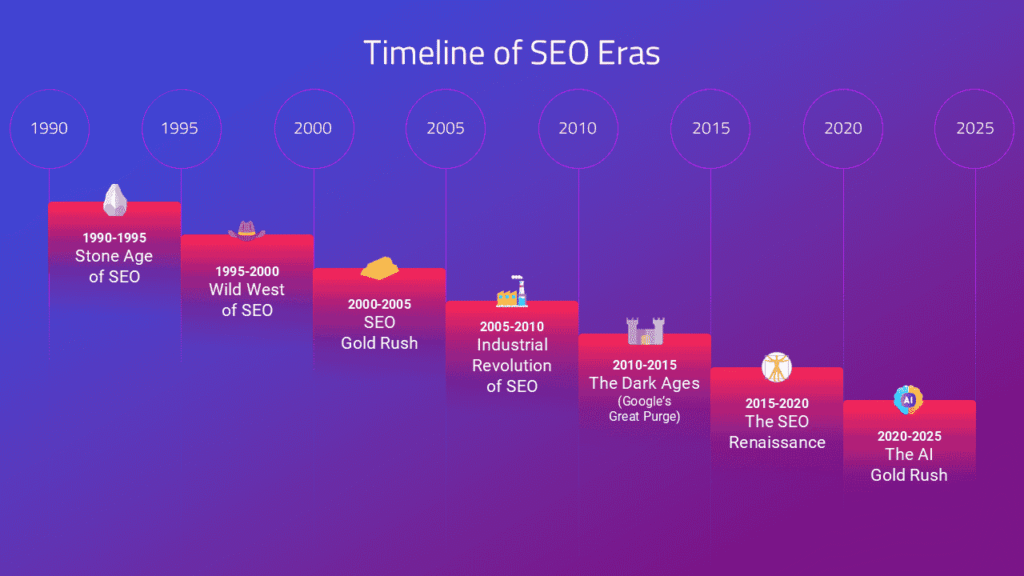
How SEO Has Evolved Over Time
From Keywords to User Intent
Remember when websites repeated the same phrase dozens of times on a single page? Those days are long gone. Modern search algorithms understand context, synonyms, and user intent through natural language processing. Google doesn’t just match words anymore; it interprets meaning.
Today’s optimization focuses on answering real questions people ask. Instead of forcing exact phrases into awkward sentences, content creators write naturally while addressing topics comprehensively. This shift benefits everyone—users get better answers, and websites that provide genuine value earn visibility.
Quality Signals Matter More Than Ever
Google’s E-E-A-T framework (Experience, Expertise, Authoritativeness, and Trustworthiness) represents a fundamental shift in how search engines evaluate content. Websites can’t game their way to the top anymore through technical tricks alone. They need to demonstrate real credentials, cite credible sources, and build reputations over time.
This evolution particularly affects content in sensitive areas like health, finance, and legal advice. Search engines now prioritize content from verified professionals and established institutions. For businesses, this means investing in subject matter experts and building authentic authority in their niches.
The Multi-Platform Reality
Optimization isn’t just about desktop searches anymore. With mobile devices generating over 60% of search traffic, websites must perform flawlessly on smartphones. Voice search through assistants like Alexa and Siri requires different optimization strategies, focusing on conversational queries and local information.
Video content on platforms like YouTube represents another search frontier. Many users prefer watching explanations over reading articles. Smart businesses optimize their video descriptions, transcripts, and thumbnails to capture this growing audience segment.
Evidence That SEO Remains Essential
If optimization were truly dying, the market would show it. Instead, the industry continues expanding. Research firms project the global market for these services will exceed $100 billion by 2028. Companies aren’t throwing money at a dead strategy—they’re doubling down on what works.
Organic search remains the primary traffic source for most websites, often driving 10 times more visitors than social media. While paid advertising delivers immediate results, organic visibility builds long-term assets. A well-optimized article can attract visitors for years without ongoing ad spend.
The job market tells a similar story. Demand for professionals with optimization skills continues growing across industries. From e-commerce to software companies, organizations recognize they need specialists who understand modern search visibility strategies.
What Modern SEO Actually Involves
Creating Genuinely Helpful Content
Today’s successful approach centers on answering user questions thoroughly and clearly. Google’s helpful content update explicitly rewards pages that prioritize reader value over search engine manipulation. This means understanding your audience’s problems, questions, and information needs.
Quality content demonstrates depth of knowledge, provides practical examples, and offers unique insights. It’s not about hitting arbitrary word counts—it’s about covering topics completely enough that readers don’t need to return to search results for additional information.
Technical Foundation Still Matters
While content quality takes center stage, technical elements remain crucial. Search engines must be able to crawl and index your site efficiently. This includes logical site architecture, fast loading speeds, mobile responsiveness, and proper use of structured data markup.
Core Web Vitals—metrics measuring page speed, interactivity, and visual stability—directly impact rankings. A beautifully written article won’t perform if it takes 10 seconds to load or shifts around while users try to read it.
Building Real Authority
Modern link building has nothing to do with buying links or participating in schemes. It’s about creating resources others naturally want to reference. This might mean publishing original research, developing useful tools, or offering expert insights that become go-to resources in your field.
Brand building and traditional marketing now intersect with search visibility. When people search for your brand name, when journalists cite your work, when industry peers reference your content—these signals contribute to your overall authority in ways that benefit search performance.
Common Misconceptions Debunked
Some believe social media has replaced search as a discovery channel. While platforms like TikTok and Instagram certainly matter for brand awareness, they serve different purposes. Social media creates moments; search captures intent. When someone actively looks for solutions, they still turn to search engines.
Others assume paid advertising offers better returns than organic visibility. Paid ads certainly have their place, particularly for immediate campaigns or testing. However, organic rankings compound over time. Your paid ads stop working the moment you stop paying; your ranked content continues delivering value indefinitely.
Perhaps the most dangerous misconception is that AI will automate content creation, making human optimization obsolete. In reality, AI has made genuine expertise more valuable, not less. Search engines are getting better at identifying generic, formulaic content. Original insights, personal experience, and expert analysis stand out more than ever.
Why Businesses Cannot Ignore Search Visibility
Consider the customer journey. Before making purchasing decisions, people research options, compare alternatives, and seek reviews. They do this primarily through search. If your business doesn’t appear in these crucial moments, you’ve lost the opportunity to influence decisions.
The cost-effectiveness remains unmatched. While you might pay $5-50 per click in competitive industries, organic visits cost nothing beyond the initial investment in optimization. Over months and years, this difference becomes substantial.
Perhaps most importantly, search visibility builds credibility. Users trust organic results more than paid advertisements. Ranking highly suggests authority and legitimacy in ways that bought placement cannot replicate.
Conclusion
The narrative that SEO is dead serves clickbait headlines more than truth. What has died are manipulative tactics and shortcuts. What survives and thrives is strategic, user-focused optimization that aligns business goals with genuine value creation.
The practice has matured from technical manipulation to holistic digital marketing. It requires understanding user behavior, creating exceptional content, building authentic authority, and maintaining technical excellence. Far from being dead, search optimization has simply evolved into something more sophisticated and valuable.
For businesses willing to invest in quality over gimmicks, organic search visibility remains one of the most reliable growth channels available. The future belongs not to those mourning old tactics, but to those embracing modern best practices that prioritize user needs while maintaining technical excellence.
