

In today’s competitive digital landscape, having a website isn’t enough—you need people to find it. That’s where search engine optimization becomes crucial. Whether you’re a small business owner or managing a large enterprise, understanding what SEO services entail can make the difference between online obscurity and digital success. This comprehensive guide breaks down everything you need to know about professional search optimization, helping you make informed decisions for your business’s online presence.
Understanding SEO Services: A Complete Definition
At its core, SEO services represent a collection of strategic activities designed to improve your website’s visibility in search engine results. These professional offerings go beyond simple keyword stuffing or quick fixes—they encompass a holistic approach to making your website more attractive to search engines like Google, Bing, and Yahoo.
Professional search optimization involves analyzing how search engines work, understanding what people search for, and optimizing your digital presence accordingly. Unlike paid advertising where visibility stops the moment you stop paying, organic search strategies build sustainable, long-term results that compound over time.
The landscape of search engine optimization has evolved dramatically over the past decade. What once worked through manipulative tactics now requires genuine value creation, technical excellence, and user-focused content. Modern SEO services reflect this evolution, prioritizing quality and user experience above all else.
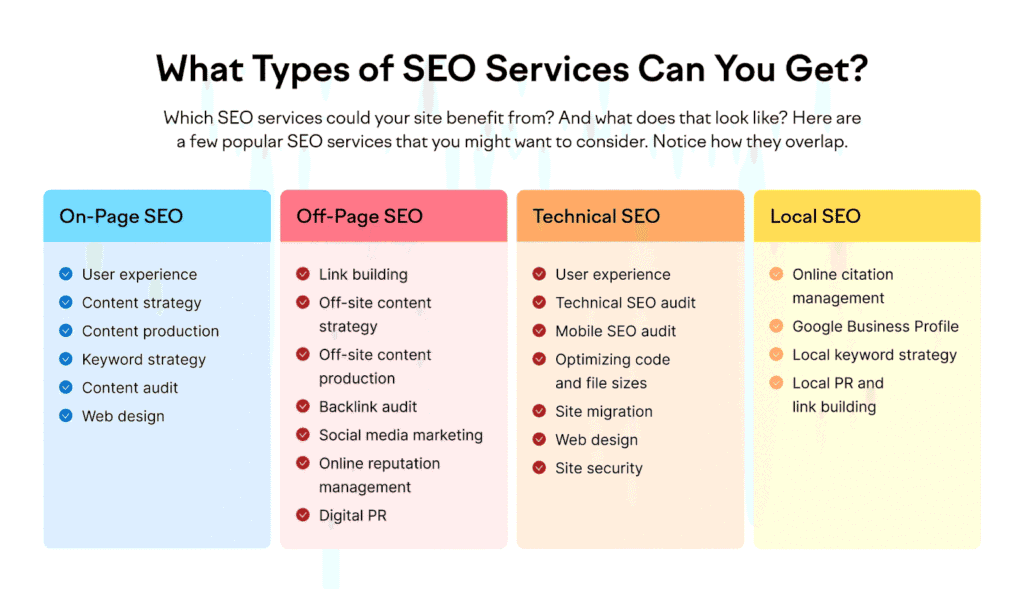
Core Components That Make Up Professional SEO Services
Technical SEO: The Foundation of Success
Technical optimization forms the backbone of any successful search strategy. This involves ensuring your website is technically sound and easily crawlable by search engine bots. Key elements include improving website speed—because nobody waits for slow-loading pages—and ensuring mobile responsiveness, as more than half of all web traffic now comes from mobile devices.
Site architecture plays a crucial role too. A well-structured website helps both users and search engines navigate your content efficiently. This includes creating logical URL structures, implementing XML sitemaps, and properly configuring robots.txt files. Security matters as well; HTTPS encryption has become a standard ranking factor that signals trustworthiness to both users and search engines.
On-Page Optimization: Content Meets Strategy
On-page optimization represents where content strategy meets technical implementation. It starts with comprehensive keyword research—identifying the exact terms your potential customers use when searching for solutions you provide. However, this isn’t about cramming keywords everywhere; it’s about natural integration that serves the reader first.
Title tags and meta descriptions act as your website’s first impression in search results. These elements need to be compelling enough to earn clicks while accurately describing your content. Header tags (H1, H2, H3) organize your content hierarchically, making it easier for both readers and search engines to understand your page structure.
Content optimization extends beyond just text. Internal linking helps distribute page authority throughout your site while guiding users to relevant information. Image optimization, including proper file names and alt text, improves accessibility and provides additional ranking opportunities.
Off-Page SEO: Building Authority Beyond Your Website
Off-page optimization focuses on building your website’s authority and reputation across the internet. Link building remains a cornerstone of this effort—earning links from reputable websites signals to search engines that your content is valuable and trustworthy. However, quality trumps quantity here; a single link from an authoritative source carries more weight than dozens from low-quality sites.
Brand mentions, even without links, contribute to your online authority. When reputable sources mention your business, it reinforces your credibility. Social signals, while their direct impact on rankings remains debated, certainly influence brand visibility and traffic.
Content Marketing: The Fuel for SEO Success
Content marketing and search optimization work hand-in-hand. Creating valuable, relevant content that answers your audience’s questions naturally attracts both readers and search engine attention. This includes developing comprehensive blog posts, creating evergreen resources that remain relevant over time, and regularly updating existing content to maintain accuracy.
A solid content strategy considers user intent at every stage of the customer journey. Are people looking for information, comparing options, or ready to purchase? Different content types serve different purposes, and professional services ensure you’re creating the right content for the right audience at the right time.

Local SEO: Dominating Your Geographic Market
For businesses serving specific geographic areas, local optimization becomes essential. This specialized service focuses on appearing in local search results and Google Maps. Optimizing your Google Business Profile, ensuring consistent NAP (Name, Address, Phone) citations across directories, and actively managing customer reviews all contribute to local visibility.
Local keyword targeting—incorporating location-specific terms into your content strategy—helps you connect with nearby customers actively searching for your services. This proves particularly valuable for service businesses, restaurants, retail stores, and professional practices.
Different Types of SEO Services Available
The SEO industry offers various service models to match different business needs and budgets. Full-service packages provide comprehensive coverage, handling everything from technical audits to content creation and link building. These work well for businesses wanting a hands-off approach with a dedicated team managing their entire search presence.
Specialized services cater to specific needs. E-commerce optimization focuses on product pages, category structure, and conversion optimization unique to online stores. Enterprise-level services scale to handle large websites with thousands of pages, requiring sophisticated strategies and tools.
Some businesses prefer SEO consulting—expert guidance that empowers their in-house teams rather than outsourced execution. Technical audits provide one-time assessments identifying issues without ongoing management. Understanding these options helps you choose services aligned with your resources and goals.
How Professional SEO Services Actually Work
Professional search optimization follows a systematic process rather than random tactics. It begins with a comprehensive website audit analyzing your current performance, identifying technical issues, and uncovering opportunities. This diagnostic phase reveals exactly where you stand and what needs attention.
Competitor research follows, examining what successful competitors do well and identifying gaps you can exploit. This competitive intelligence informs strategy without copying—finding your unique angle in the market.
Keyword research and strategy development form the roadmap. This involves identifying high-value search terms, understanding search intent, and prioritizing opportunities based on difficulty and potential return. Implementation then brings the strategy to life through technical fixes, content creation, and optimization.
The process doesn’t end with implementation. Ongoing monitoring tracks performance, identifies new opportunities, and adapts to algorithm updates. Regular reporting keeps you informed about progress, challenges, and ROI. Patience matters here—meaningful results typically appear within three to six months, with continued improvement over time.
Why Businesses Invest in Professional SEO Services
The benefits of professional search optimization extend far beyond just rankings. Increased organic traffic brings qualified visitors actively searching for what you offer—these people are already interested, making them more likely to convert than random advertising impressions.
Improved user experience, a natural byproduct of good optimization, reduces bounce rates and increases engagement. When your website loads quickly, works flawlessly on mobile devices, and provides valuable content, visitors stay longer and return more often.
The return on investment often surpasses paid advertising. While SEO requires upfront investment and patience, the results compound over time without continuous ad spending. A well-ranked page can drive traffic for years, whereas paid ads stop delivering the moment your budget runs out.
Conclusion
Understanding what SEO services encompass empowers you to make strategic decisions about your digital presence. From technical foundations to content excellence and authority building, professional search optimization represents a comprehensive approach to online visibility. The investment in quality services pays dividends through sustainable traffic, improved user experience, and competitive advantage. As search engines continue evolving, partnering with knowledgeable professionals or building in-house expertise becomes not just beneficial—it’s essential for long-term digital success.
