

Search engine optimization has evolved into one of the most complex and technically demanding aspects of modern digital marketing. What began as relatively straightforward keyword placement and basic link building now encompasses intricate technical audits, sophisticated content strategies, algorithm analysis, user experience optimization, and data-driven decision-making requiring specialized expertise. Most businesses recognize that strong search engine visibility directly impacts customer acquisition and revenue, yet few possess the internal resources to execute comprehensive optimization effectively while managing their core operations.
This reality has created substantial demand for outsourcing arrangements where businesses engage external specialists to handle search optimization entirely or supplement limited internal capabilities. Outsourcing offers compelling advantages—access to specialized expertise without full-time employment costs, scalability matching business growth, exposure to best practices refined across multiple clients, and freedom to focus internal resources on core competencies. However, outsourcing also introduces risks including quality variability, communication challenges, potential confidentiality concerns, and dependence on external providers.
The decision to outsource SEO service requires careful evaluation balancing potential benefits against inherent risks. Not every business benefits equally from outsourcing, and not every provider delivers value justifying their fees. Some companies successfully build internal capabilities over time, while others thrive through long-term partnerships with trusted external specialists. Understanding your specific circumstances, evaluating options systematically, and structuring relationships appropriately determines whether outsourcing strengthens or compromises your search visibility efforts.
This comprehensive guide explores everything businesses need to know about outsourcing search optimization work—when outsourcing makes sense, what services you can outsource, how to evaluate competing providers, pricing expectations, risk management strategies, and best practices ensuring successful partnerships. Whether you’re considering outsourcing for the first time or seeking better alternatives to current arrangements, this guide helps you make informed decisions that advance your business objectives while protecting your brand reputation.
Understanding When to Outsource SEO Services
Outsourcing makes strategic sense in specific circumstances while remaining suboptimal in others. Honest assessment of your situation, capabilities, and goals determines whether external partnerships or internal development better serves your interests
Situations Where Outsourcing Makes Sense
Limited internal expertise represents the most common and compelling outsourcing driver. Search optimization requires knowledge spanning technical web development, content marketing, data analytics, and algorithmic understanding. Few businesses employ staff possessing comprehensive expertise across all these domains. Rather than attempting to develop this breadth internally, outsourcing accesses established expertise immediately without lengthy recruitment, training, and development processes.
Capacity constraints affect even organizations with some internal search optimization knowledge. Your marketing team might understand SEO fundamentals but lack bandwidth to execute comprehensive programs while managing other responsibilities. Outsourcing supplements limited internal capacity, handling execution while your team maintains strategic oversight and focuses on activities where internal involvement matters most.
Cost considerations frequently favor outsourcing over building extensive internal teams. Employing senior SEO specialists typically costs £40,000-£70,000+ annually per person, plus benefits, equipment, training, and management overhead. Outsourcing to agencies or specialists often provides equivalent or superior expertise for £2,000-£10,000 monthly—potentially less than half the cost of employing full-time specialists while accessing broader capabilities than any single employee possesses.
Temporary or project-based needs suit outsourcing particularly well. Website migrations, major content initiatives, link building campaigns, or recovery from penalties represent intensive but time-limited efforts. Outsourcing provides concentrated expertise for these initiatives without committing to ongoing employment relationships inappropriate for temporary needs.
Situations Favoring Internal Development
Strategic importance and competitive differentiation argue for internal capabilities when search optimization represents a core competitive advantage. If online visibility fundamentally drives your business model—think publishers, lead generation operations, or digital-first retailers—maintaining internal expertise provides strategic control, faster adaptation to market changes, and proprietary knowledge competitors cannot easily replicate.
Sufficient scale to support dedicated staff makes internal teams economically viable for larger organizations. If your search optimization needs justify employing multiple full-time specialists, internal teams often deliver better results through deeper business understanding, faster communication, and cultural alignment compared to external providers serving dozens of clients simultaneously.
Intellectual property and confidentiality concerns sometimes preclude outsourcing. Businesses with proprietary methodologies, sensitive competitive information, or strict data privacy requirements may find outsourcing risks outweigh benefits. Industries like healthcare, finance, or government often face regulatory constraints limiting what work can be performed by external parties.
Control and flexibility requirements favor internal capabilities when you need immediate responsiveness, tight coordination with other marketing activities, or frequent strategic pivots. External providers operate on contracted schedules with agreed deliverables, offering less flexibility than internal teams you directly manage.
What SEO Services You Can Outsource
Search optimization encompasses numerous specialized components, each outsourceable independently or as part of comprehensive programs. Understanding available options helps you determine which elements to outsource versus handling internally.
Technical SEO and Website Optimization
Technical services ensure search engines can efficiently crawl, understand, and index your website. Providers conduct comprehensive audits identifying site speed issues, mobile usability problems, crawlability obstacles, indexation errors, and structural inefficiencies. They implement fixes directly or provide detailed specifications for your development team. Technical work particularly benefits from outsourcing because it requires specialized expertise many businesses lack internally.
Technical optimization includes Core Web Vitals improvement ensuring fast loading and smooth interactions, mobile responsiveness verification across devices, structured data implementation enabling rich search results, XML sitemap optimization facilitating content discovery, robots.txt configuration controlling crawler access, and security implementations including HTTPS and other protective measures.

Content Strategy and Creation
Content services range from strategic planning through actual article writing and optimization. Providers research topics addressing search intent and business goals, develop editorial calendars ensuring consistent publication, create original well-written material, optimize existing content for improved visibility, and promote content earning links and social engagement.
Content represents one of the most commonly outsourced SEO elements because quality content creation demands significant time and writing skill. However, content outsourcing requires careful quality oversight ensuring material accurately represents your brand voice, demonstrates appropriate subject expertise, and genuinely helps readers rather than existing solely for search engines.
Link Building and Digital PR
Link acquisition services earn the external citations that significantly influence rankings, particularly for competitive keywords. Quality providers focus exclusively on legitimate tactics: creating linkable content assets naturally attracting citations, relationship-based outreach to relevant publishers, guest contributions to authoritative industry sites, digital PR campaigns earning media coverage, and strategic partnerships with complementary businesses.
Link building outsourcing demands extreme caution because low-quality or manipulative tactics risk severe penalties. Thoroughly vet providers’ methods, insist on transparency about link sources, and reject any services involving link purchases, private blog networks, or other schemes violating search engine guidelines.
Local SEO Optimization
Local services help businesses serving specific geographic areas appear for location-based searches. This includes Google Business Profile optimization ensuring complete accurate listings, local citation building establishing consistent business information across directories, review management encouraging positive feedback, location-specific content targeting neighborhood searches, and local link building from community websites.
Local optimization suits outsourcing well because providers often maintain relationships with local directories, news sites, and business organizations across many regions, enabling efficient citation building and link acquisition at scale impossible for individual businesses.
SEO Audits and Strategy Development
Audit and strategy services provide expert analysis and planning without ongoing implementation responsibility. Providers comprehensively evaluate your current search performance, competitive positioning, and technical infrastructure, then develop detailed recommendations prioritizing improvements by potential impact. You handle implementation internally or through other providers.
Audit services work excellently for businesses with internal implementation capabilities but wanting expert assessment and strategic guidance. They provide one-time or periodic value without requiring ongoing outsourcing relationships.
Choosing the Right SEO Outsourcing Provider
Provider selection represents your most critical outsourcing decision because quality directly impacts results and your brand reputation suffers from poor work even though you didn’t perform it. Systematic evaluation prevents costly mistakes.
Essential Evaluation Criteria
Proven expertise and track record provide the strongest performance indicators. Look for providers with years of experience, documented case studies showing specific results achieved, and client references willing to discuss their experiences honestly. Ask candidates about clients in your industry or with similar challenges, understanding how they adapted strategies to industry-specific requirements.
During initial consultations, assess providers’ depth beyond sales presentations. Discuss specific technical challenges or strategic questions revealing whether they genuinely understand search algorithms or simply recite generic best practices. Quality providers explain complex concepts clearly while demonstrating real expertise rather than surface knowledge.
Communication quality and responsiveness matter enormously in outsourcing relationships where you depend on external providers meeting commitments. Evaluate how quickly candidates respond to inquiries, whether they provide clear substantive answers, and if they proactively communicate about potential issues rather than waiting for you to discover problems. Poor communication creates frustration regardless of technical work quality.
Process transparency and methodology explanations reveal whether providers use appropriate tactics. Quality providers willingly explain their approaches, discuss specific methods they employ, and educate you about why particular strategies work. Providers remaining vague about implementation details or dismissing methodology questions with “trust us, this is complex” likely hide questionable tactics you’d reject if understood.
Red Flags Signaling Problem Providers
Guaranteed rankings remain the clearest warning sign disqualifying providers from consideration. No legitimate provider can guarantee specific rankings because they don’t control Google’s algorithms. Providers making ranking promises either fundamentally misunderstand search or knowingly make commitments they cannot honestly fulfill.
Suspiciously low pricing typically indicates corner-cutting, minimal actual work, or risky tactics. Quality optimization requires substantial time and expertise—providers charging dramatically below market rates cannot possibly deliver comprehensive services worth the investment. While competitive pricing makes sense, prices far below alternatives raise serious questions about value delivered or methods employed.
Lack of references or reluctance providing client contacts suggests providers hiding problematic relationships or disappointing results. Quality providers readily connect prospects with satisfied clients who will honestly discuss results achieved, communication quality, and overall satisfaction. Providers avoiding references or offering only cherry-picked testimonials likely conceal negative experiences.
Pressure tactics and aggressive sales approaches often accompany low-quality providers desperate for clients. Quality providers with strong reputations and full client rosters can afford patient consultative approaches rather than high-pressure closes. Providers creating artificial urgency, offering “limited time” discounts, or pushing for immediate decisions without adequate evaluation time merit suspicion.
Outsourcing Pricing and Cost Considerations
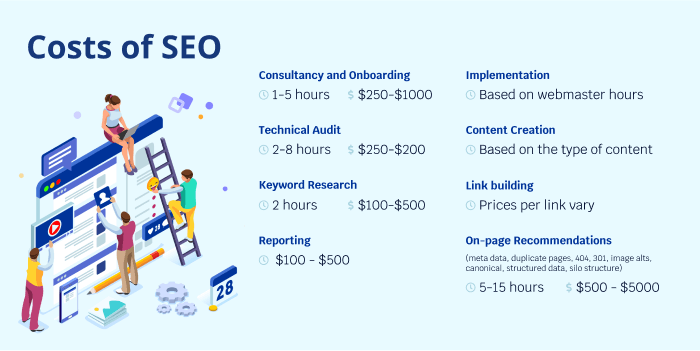
Understanding typical pricing structures helps you budget appropriately and evaluate whether specific proposals represent fair value. Outsourcing costs vary dramatically based on service scope, provider experience, and geographic location.
Typical Pricing Models for Outsourced SEO
Monthly retainers represent the most common structure for ongoing optimization. Expect £1,000-£10,000+ monthly depending on service comprehensiveness and business size. Small businesses with basic needs might pay £1,000-£3,000 monthly for fundamental optimization and regular monitoring. Mid-sized companies with moderate competition often invest £3,000-£6,000 monthly. Larger organizations or highly competitive industries may require £6,000-£15,000+ monthly for comprehensive optimization across technical, content, and link building elements.
Project-based pricing suits specific initiatives with defined scopes and completion points. Comprehensive technical audits typically cost £2,000-£8,000 depending on site complexity. Content strategy development ranges £3,000-£10,000. Link building campaigns vary from £3,000 for focused local efforts to £25,000+ for extensive digital PR. Website migration support ensuring SEO preservation costs £5,000-£20,000+ based on site size and complexity.
Hourly consulting rates typically range £75-£300+ per hour, with rates reflecting provider experience, specialization, and location. This model suits businesses needing occasional strategic advice or technical troubleshooting rather than comprehensive ongoing optimization.
Factors Influencing Outsourcing Costs
Geographic location significantly affects pricing. Providers in major Western cities typically charge premium rates reflecting their cost bases and market positioning. Offshore providers in countries like India, Philippines, or Eastern Europe often charge 40-70% less than Western counterparts, though quality varies dramatically requiring extra diligence.
Service scope naturally scales costs. Basic packages covering technical monitoring and minimal content cost far less than comprehensive programs including regular content creation, active link building, and extensive optimization. Clearly understand what each pricing tier includes ensuring accurate comparison between proposals.
Competition level in your market impacts required investment. Ranking for competitive keywords in saturated markets demands more extensive content, sophisticated technical optimization, and aggressive link building than competing in niches with limited rivalry. Providers should assess competition during consultations and provide realistic budget guidance.
Contract terms and commitment levels affect per-month costs. Longer commitments or larger retainers often secure discounted pricing, while month-to-month arrangements provide flexibility at premium rates. Balance cost savings from commitments against flexibility to change providers if dissatisfied.
Managing Outsourced SEO Relationships Successfully
Effective outsourcing requires clear agreements, consistent oversight, and appropriate communication ensuring providers deliver promised value while protecting your interests.
Structuring Agreements and Expectations
Detailed contracts documenting services, deliverables, timelines, and quality standards prevent misunderstandings while providing recourse when providers underperform. Specify exactly what work providers will perform, what you’ll receive and when, quality criteria deliverables must meet, communication protocols and response time expectations, and remedies when standards aren’t met.
Scope definition deserves particular attention because vague agreements create disputes about what’s included versus additional. Document whether services include technical implementation or only recommendations, specific content quantity and topics covered, link building tactics and expected volume, reporting frequency and format, and strategic consultation allocation.
Performance metrics and success criteria should be explicitly defined establishing how you’ll evaluate results. While guaranteeing specific rankings remains impossible, providers should commit to measurable improvements in agreed metrics like organic traffic, keyword rankings for defined terms, conversion improvements, or other relevant indicators. Regular measurement against these benchmarks provides objective performance assessment.
Quality Control and Oversight
Regular deliverable review before implementation catches quality issues while you can still request revisions. Schedule review time into your workflows ensuring you examine all provider work—content before publishing, technical implementations before launch, link opportunities before approval, reports before client presentations—maintaining standards consistent with your brand.
Periodic comprehensive audits beyond reviewing deliverables ensure ongoing quality maintenance. Quarterly or semi-annual deep reviews examining actual outcomes achieved, comparing results against promises, and assessing whether relationships deliver expected value identify problems before they seriously damage your business.
Direct client or stakeholder feedback monitoring reveals whether end users perceive value in outsourced work. If customers, executives, or other stakeholders express disappointment with specific elements, providers may not be meeting quality standards despite deliverables passing your review. Stakeholder perceptions often reveal problems you miss in isolated work examinations.
Communication and Collaboration
Scheduled regular meetings maintain alignment and enable proactive issue resolution. Weekly or bi-weekly calls reviewing progress, discussing challenges, planning upcoming work, and addressing questions prevent small issues from becoming major problems. These structured touchpoints ensure consistent attention rather than only communicating when problems arise.
Clear communication channels and escalation paths prevent confusion when issues need resolution. Establish who manages the relationship day-to-day, who handles technical questions, who addresses billing, and who escalates serious concerns. Document these structures ensuring everyone understands appropriate contacts for different situations.
Collaborative tools and shared documentation improve coordination. Project management platforms, shared drives for deliverables, and communication tools create transparency about work status, deliverable locations, and project progression. These systems reduce email chaos while maintaining organized records of all work and communications.
Conclusion
Outsourcing SEO services enables businesses to access specialized expertise, supplement limited internal capacity, and potentially reduce costs compared to building comprehensive in-house teams. Quality outsourcing partnerships strengthen search visibility, drive customer acquisition, and free internal resources for core business activities when structured appropriately with reliable providers.
Success requires honest assessment of whether outsourcing suits your specific circumstances, careful provider selection prioritizing quality over lowest prices, clear agreements establishing expectations and standards, consistent quality oversight ensuring deliverables meet requirements, and effective communication maintaining alignment throughout relationships. The best outsourcing arrangements function as genuine partnerships where both parties benefit through aligned incentives and mutual success.
Ready to explore outsourcing your search optimization efforts? Begin by honestly evaluating your internal capabilities and needs, defining which services you want to outsource versus handling internally, establishing quality standards and budget parameters, researching providers whose specializations match your requirements, and structuring trial periods testing relationships before committing to long-term agreements. The investment in finding quality outsourcing partners pays dividends through improved search visibility, enhanced customer acquisition, and focus on your core business strengths.
