

Digital marketing agencies face a persistent challenge balancing client demand for comprehensive services against the specialized expertise required to deliver exceptional results across every discipline. Your clients expect you to handle their complete online presence—website development, search optimization, paid advertising, social media management, content creation, and more. However, building in-house teams with genuine expertise in every specialty requires substantial investment in recruitment, training, overhead, and ongoing professional development that many agencies cannot justify economically.
This dilemma has created a thriving market for white label services where specialized providers deliver expert work under your agency’s brand. You maintain client relationships, manage overall strategy, and present deliverables as your own work, while behind the scenes, specialist partners handle technical implementation, content creation, or campaign management. For search optimization specifically, white label partnerships enable agencies without deep technical expertise to offer competitive services, established agencies to scale capacity without proportional headcount increases, and specialized providers to leverage their expertise serving multiple agencies simultaneously.
However, white label relationships carry unique risks absent from traditional client-agency engagements. Quality problems with outsourced work reflect on your agency’s reputation even though you didn’t perform the work. Communication breakdowns between you, your white label partner, and end clients create confusion and disappointment. Pricing structures must allow reasonable margins while remaining competitive with direct alternatives. Choosing inappropriate partners can damage client relationships, while selecting quality providers strengthens your service offering and enables profitable growth.
This comprehensive guide explores everything agencies need to know about white label search optimization partnerships—what these services include, how arrangements typically work, how to evaluate competing providers, pricing expectations, risk management strategies, and best practices for structuring successful long-term partnerships. Whether you’re considering white label options for the first time or seeking better alternatives to current providers, this guide helps you make informed decisions that strengthen rather than jeopardize your business.
Understanding White Label SEO Service Models
White label arrangements involve one company performing work that another company brands and delivers as their own. In search optimization contexts, specialist agencies or freelancers execute technical audits, implement on-page improvements, create optimized content, build links, and manage ongoing optimization while your agency maintains client relationships and presents all deliverables under your branding. Clients typically don’t know you’re outsourcing work—they believe your internal team handles everything.
This model benefits all parties when structured properly. Your agency offers comprehensive services without maintaining expensive specialist staff, providing clients complete solutions through a single relationship. You control client communication and overall strategy while delegating technical execution to experts. The white label provider gains consistent work volume from multiple agency partners without needing to manage end-client relationships or handle sales and account management. Clients receive expert execution at competitive prices through the efficiency of specialized providers serving multiple agencies simultaneously.
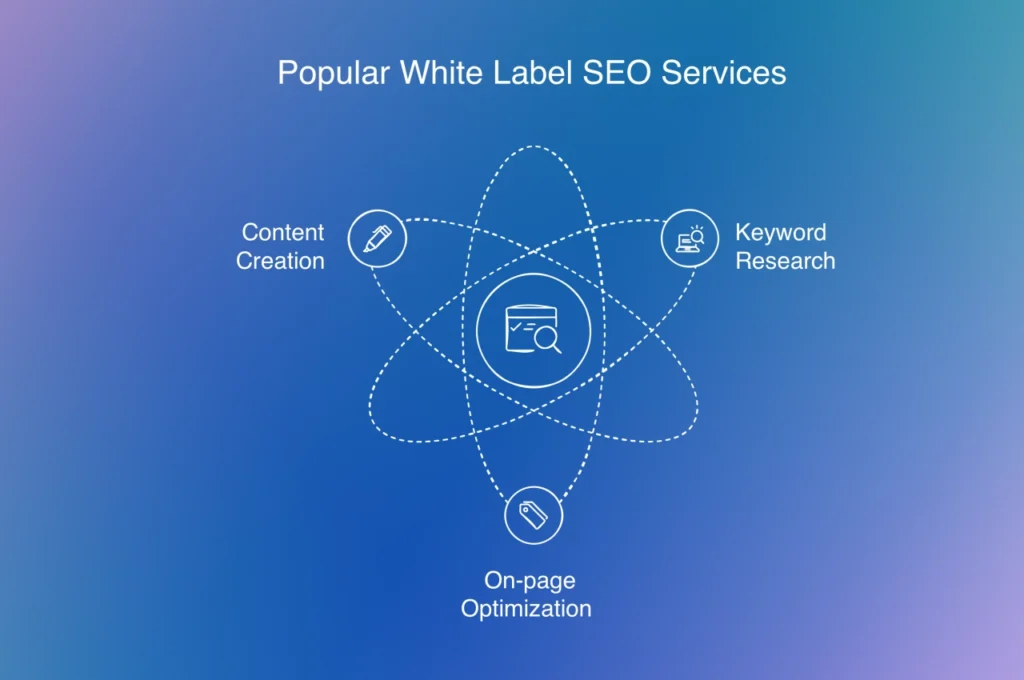
Full-Service White Label Partnerships
Full-service white label providers handle complete search optimization programs from initial audits through ongoing monthly optimization. These comprehensive partnerships suit agencies wanting to offer search services without any internal SEO expertise. The provider conducts technical audits, develops optimization strategies, implements on-page improvements, creates content, builds links, and generates client reports—essentially functioning as your outsourced SEO department.
Full-service arrangements simplify operations by consolidating all search work with one partner but create significant dependence. If the provider’s quality disappoints or the relationship ends, you must replace their capabilities entirely rather than just specific components. This concentration of risk requires extremely careful provider selection and ongoing quality monitoring ensuring consistency with your brand standards.
Specialized Component Services
Component-based white label services focus on specific optimization elements rather than comprehensive programs. Providers might specialize exclusively in technical audits, link building, content creation, or local optimization. This modular approach allows you to outsource specific components while maintaining other capabilities internally or through different specialists.
Component services provide flexibility and risk distribution across multiple providers. If one partnership disappoints, you can replace that specific element without disrupting your entire service delivery. However, coordinating multiple specialist providers requires more management overhead and increases complexity compared to single full-service partnerships.
Report-Only White Label Services
Report-only arrangements provide the most limited scope, where providers deliver white label reports analyzing your client’s search performance, competitive positioning, or technical issues. Your agency or your client handles actual optimization work, with the white label provider contributing only analysis and recommendations presented under your branding.
This model suits agencies with internal implementation capabilities wanting expert analysis and reporting without outsourcing execution. It provides the least value but also minimizes dependence and maintains maximum control over actual optimization approaches.
What White Label SEO Services Typically Include
Understanding what white label providers actually deliver helps you evaluate offerings and ensure comprehensive coverage of essential optimization elements. Quality providers offer thorough services across technical, on-page, content, and off-page optimization categories.
Technical SEO Audits and Implementation
Technical audits comprehensively examine website infrastructure identifying problems that prevent optimal crawling, indexing, and ranking. Quality providers analyze site speed and Core Web Vitals performance, mobile responsiveness and usability, crawlability and indexation status, URL structure and internal linking architecture, XML sitemaps and robots.txt configuration, structured data implementation, and security configurations. Audit reports document findings with prioritized recommendations and implementation difficulty assessments.
Implementation support varies by provider and service package. Some deliver only audit reports and recommendations, expecting your team or clients to implement fixes. Others provide hands-on implementation, making technical changes directly or providing detailed specifications for your developers. The most valuable arrangements include both analysis and implementation, ensuring recommendations actually get executed rather than sitting in reports indefinitely.
On-Page Optimization
On-page services optimize individual pages for target keywords while maintaining natural, user-focused content. This includes keyword research identifying opportunities balancing search volume, commercial intent, and ranking difficulty. Title tag and meta description optimization improves click-through rates from search results. Header tag structure creates logical content hierarchy. Internal linking distributes authority and guides users. Image optimization ensures fast loading and proper indexing.
Quality providers balance optimization with user experience, never sacrificing readability or conversion effectiveness for marginal algorithmic advantages. They understand modern search algorithms prioritize user satisfaction signals over keyword density and other outdated factors, ensuring optimization enhances rather than degrades content quality.
Content Creation and Optimization
Content services range from optimizing existing material to creating new articles, guides, and resources. White label content providers research topics addressing search intent and business goals, write original material following your brand voice guidelines, optimize content for target keywords, format for readability and engagement, and incorporate appropriate internal and external links.
Content quality varies dramatically between providers. Premium services deliver well-researched, thoroughly written material comparable to what skilled in-house writers produce. Budget providers often deliver thin, generic content that satisfies minimum word counts but fails to genuinely inform or engage readers. Content represents the most visible element of your white label work—poor quality directly damages your reputation more than technical deficiencies clients never see.

Link Building and Digital PR
Link building services earn backlinks that strengthen domain authority and improve rankings. Quality providers focus exclusively on white-hat tactics like creating linkable content assets that naturally attract citations, relationship-based outreach to relevant publishers, guest contributions to authoritative industry publications, digital PR campaigns earning media coverage, and broken link building identifying and replacing defunct resources.
Link quality matters far more than quantity. One link from a genuinely relevant, authoritative publication provides more value than dozens from low-quality directories or blog networks. Reputable white label providers maintain strict quality standards, rejecting opportunities that might technically produce links but offer minimal SEO value or risk penalties. They should clearly explain their acquisition methods and provide transparency about link sources.
Ongoing Optimization and Reporting
Monthly optimization services maintain and improve search performance over time. This includes monitoring ranking changes and traffic patterns, identifying new keyword opportunities, updating content addressing performance issues, fixing technical problems that emerge, analyzing competitor activities, and generating comprehensive performance reports.
Reporting particularly matters in white label contexts because your agency presents these reports to clients under your branding. Reports should be comprehensive yet digestible, highlighting key metrics clients care about while providing sufficient detail demonstrating ongoing work value. They must align with your brand standards in formatting, language, and professionalism level.
Choosing Quality White Label SEO Providers
Provider selection represents the most critical decision in white label relationships because their work quality directly impacts your reputation. Systematic evaluation prevents partnerships with providers who promise much but deliver disappointing results.
Essential Evaluation Criteria
Experience and track record provide the strongest indicators of likely performance. Providers with years serving agencies, documented case studies showing results achieved, and references from current agency partners demonstrate proven capabilities. Ask prospective providers specifically about their experience with white label arrangements—direct client work requires different operational capabilities than white label partnerships.
Technical expertise separates providers who genuinely understand search algorithms from those following surface-level best practices. During evaluation, discuss specific technical challenges like JavaScript rendering, international targeting, or site migration support. Strong providers explain approaches clearly while demonstrating genuine depth. Those struggling to discuss technical nuances beyond generic advice likely lack sophistication necessary for competitive situations.
Communication and responsiveness matter enormously in white label contexts where you’re intermediary between provider and end client. Providers must respond to questions promptly, meet agreed deadlines consistently, and communicate proactively when problems arise. During evaluation, assess how quickly they respond to inquiries, whether they provide clear answers, and if they demonstrate understanding of your needs as agency partner distinct from direct client needs.
Capacity and scalability determine whether providers can support your growth. Starting with one or two clients works fine initially, but as you scale white label offerings, providers must handle increasing volume without quality degradation. Ask about current client loads, team size and structure, and how they maintain quality as volumes increase. Providers already operating at capacity cannot support your growth without either rejecting new projects or allowing quality to suffer.
Red Flags That Signal Problem Providers
Guaranteed rankings remain the clearest warning sign. No legitimate provider can guarantee specific rankings because they don’t control Google’s algorithms. Providers making ranking promises either don’t understand how search works or knowingly make commitments they cannot honor. Both scenarios disqualify them from consideration.
Vague or secretive methodologies suggest providers employ tactics they know you’d reject if understood. Quality providers explain their approaches transparently, discuss specific tactics they’ll employ, and educate you about why particular methods work. Providers remaining evasive about implementation details or dismissing methodology questions likely use questionable tactics risking penalties.
Suspiciously low pricing often indicates corner-cutting on quality, limited actual work performed, or reliance on risky tactics. Quality optimization requires time and expertise—providers charging dramatically below market rates cannot possibly deliver comprehensive services worth the investment. While competitive pricing makes sense, prices far below alternatives raise serious questions about actual value delivered.
Poor English or communication skills create problems in white label contexts even if technical work quality remains acceptable. You’ll present provider deliverables to clients—reports, strategy documents, content—under your branding. If materials contain obvious errors, awkward phrasing, or unprofessional presentation, clients judge your agency negatively regardless of who actually produced the work.
White Label SEO Pricing and Profit Margins
Understanding typical pricing structures helps you budget appropriately, evaluate provider proposals, and establish your own client pricing maintaining healthy margins. White label costs vary based on service comprehensiveness, provider experience, and volume commitments.
Typical Provider Pricing Models
Monthly retainer arrangements represent the most common structure for ongoing optimization. White label providers typically charge agencies £500-£3,000 monthly per client depending on service scope. Basic packages covering technical monitoring, minimal content, and reporting might cost £500-£800 monthly. Comprehensive programs including regular content creation, active link building, and extensive optimization often run £1,500-£3,000 monthly. Your agency then marks up these costs 50-100% or more when pricing to end clients.
Project-based pricing suits specific initiatives with defined scopes. A comprehensive technical audit might cost £800-£2,000 from white label providers. Link building campaigns range £1,000-£5,000 depending on tactics and volume. Website migration support ensuring SEO preservation ranges £2,000-£8,000. You typically mark up these project costs 40-80% when invoicing clients while adding your management overhead.
Hourly rates for ad-hoc work typically range £50-£150 per hour from white label providers, considerably less than what agencies charge end clients. This creates margin opportunities for smaller tasks, troubleshooting, or consultation that don’t fit into packaged offerings.
Maintaining Healthy Margins
Markup percentages vary by market positioning and service bundling. Agencies operating as premium providers might maintain 100%+ markups, charging clients £3,000 monthly for services costing £1,500 from white label partners. Value-focused agencies might accept 40-60% margins, prioritizing competitive pricing over maximum profitability per client. Your positioning, overhead costs, and desired profitability determine appropriate markup levels.
Value-added services justify higher margins by combining white label technical work with your strategic oversight, client communication, and business consultation. Clients don’t just pay for technical implementation—they pay for strategic guidance, account management, business expertise, and your reputation. Emphasizing these value-adds justifies pricing well above pure white label costs.
Volume discounts from white label providers improve margins as you scale. Many providers offer tiered pricing where per-client costs decrease as you commit to larger monthly minimums or annual contracts. These volume advantages strengthen profitability as you grow white label offerings.
Best Practices for White Label Relationships
Successful white label partnerships require clear agreements, consistent quality oversight, and appropriate client communication maintaining your brand reputation while leveraging provider expertise.
Structuring Agreements and Expectations
Detailed service level agreements document exactly what providers will deliver, quality standards they must meet, turnaround times for deliverables, communication protocols, and remedies when standards aren’t met. SLAs prevent misunderstandings by establishing explicit expectations rather than assuming shared understanding.
Quality standards deserve particular attention because provider definitions of “good enough” may not match your brand standards. Specify content length and depth requirements, acceptable source quality for backlinks, technical audit thoroughness, and report professionalism levels. Provide examples of deliverables meeting your standards and those falling short.
White label agreements should address client interaction protocols. Providers must understand they should never communicate directly with your clients, that all communications flow through your agency, and that maintaining your branding remains paramount. Specify how providers should handle situations where clients somehow contact them directly—typically referring clients back to you while avoiding detailed discussions.
Quality Control and Oversight
Regular deliverable review before client presentation catches quality issues while you can still address them internally rather than disappointing clients with substandard work. Schedule buffer time between receiving provider deliverables and your committed client deadlines, allowing review and revision if needed.
Periodic performance audits beyond reviewing deliverables ensure ongoing standards maintenance. Quarterly deep reviews examining outcomes achieved, comparing results against promises, and assessing whether the partnership delivers expected value help identify problems before they seriously damage client relationships.
Client feedback monitoring reveals whether end clients perceive value in services you’re white labeling. If multiple clients express disappointment with specific elements, providers may not be meeting quality standards despite deliverables passing your review. Direct client feedback often reveals problems you miss in isolated deliverable examination.
Conclusion
White label SEO services enable agencies to offer comprehensive search optimization without maintaining expensive specialist staff, providing clients complete solutions through single relationships while focusing your team on strategic planning and client management. Quality partnerships with reliable providers strengthen your service offerings, enable profitable growth, and enhance rather than compromise your reputation when structured properly.
Success requires careful provider selection prioritizing quality and communication over lowest prices, clear agreements establishing expectations and standards, consistent quality oversight ensuring deliverables meet your brand requirements, and appropriate client communication maintaining your reputation while leveraging provider expertise. The best white label relationships function as genuine partnerships where both parties benefit through aligned incentives and mutual success.
Ready to expand your agency’s capabilities through white label partnerships? Begin by clearly defining which services you want to outsource, establishing quality standards providers must meet, researching candidates whose specializations and capacity match your needs, and structuring trial periods testing relationships before committing to long-term agreements. The investment in finding quality white label partners pays dividends through expanded service offerings, improved profitability, and satisfied clients receiving expert optimization under your trusted brand.
