

The digital landscape has transformed how businesses connect with potential customers online. Among the most powerful tools available today is PPC search engine internet marketing—a strategy that delivers immediate visibility and measurable results. Unlike traditional advertising methods that cast wide nets, paid search marketing allows businesses to target specific audiences at the precise moment they’re searching for relevant products or services.
According to recent industry data, businesses generate an average of $2 for every $1 spent on Google Ads campaigns. This remarkable return on investment explains why companies of all sizes are increasingly allocating budgets toward search advertising. Whether you’re a small business owner or managing campaigns for enterprise clients, understanding how PPC works is essential for digital marketing success in today’s competitive environment.
What is PPC Search Engine Internet Marketing?
Pay-per-click advertising represents a model where advertisers pay fees each time someone clicks their ads. Rather than earning visits organically, businesses essentially purchase targeted traffic to their websites. This approach differs fundamentally from search engine optimization, which focuses on earning rankings through content quality and technical improvements.
The beauty of this system lies in its efficiency. You’re not paying for impressions or views—only for actual engagement. When executed properly, the cost of each click becomes trivial because the visit generates more value than the advertising expense. For instance, if you pay $3 per click but that click results in a $300 sale, the investment becomes incredibly profitable.
Search engine marketing through paid channels works by displaying your advertisements above or alongside organic search results. When users type queries related to your offerings, your ads appear prominently, capturing attention at the critical moment when purchase intent is highest. This immediate positioning gives businesses a competitive advantage that organic methods alone cannot match.

Major PPC Search Engine Platforms
Google Ads: The Industry Leader
Google dominates the search engine market with over 90% global market share, making Google Ads the primary platform for most internet marketing strategies. The platform offers extensive reach, sophisticated targeting options, and powerful analytics tools. Advertisers can create text ads, shopping campaigns, display advertisements, and video promotions—all managed through a single interface.
The platform’s strength lies in its massive user base. Billions of searches occur daily, creating countless opportunities for businesses to connect with potential customers. Additionally, Google’s machine learning capabilities help optimize campaigns automatically, adjusting bids and placements to maximize performance.
Microsoft Advertising: The Alternative Option
While smaller than Google, Microsoft Advertising (formerly Bing Ads) shouldn’t be overlooked. The platform reaches millions of users who prefer Bing, Yahoo, and other partner search engines. Microsoft’s audience tends to skew slightly older and more affluent, which can be advantageous for certain industries.
Many advertisers find less competition on Microsoft’s platform, resulting in lower cost-per-click rates. For businesses seeking to diversify their online advertising efforts beyond Google, Microsoft Advertising offers a valuable complementary channel.
How PPC Search Engine Marketing Works
Understanding the auction mechanism is crucial for success. When someone performs a search, the search engine runs an instantaneous auction to determine which ads appear and in what order. This process considers multiple factors beyond just bid amounts.
Quality Score plays a pivotal role in ad placement. Search engines evaluate the relevance of your keywords, ad copy quality, and landing page experience. Higher quality scores mean lower costs and better positioning—even if competitors bid more money. This system rewards advertisers who create valuable, relevant experiences for users.
The ad rank formula combines your maximum bid with your quality score. An advertiser with a modest bid but excellent quality score can outrank competitors spending significantly more. This democratizes paid search marketing, allowing smaller businesses to compete effectively against larger competitors with bigger budgets.
Benefits of PPC Search Engine Marketing
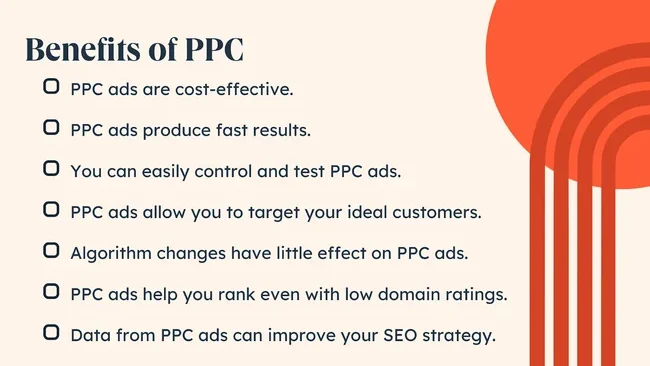
The advantages of paid search advertising extend far beyond simple visibility. First, results are immediate. While SEO requires months to show impact, PPC campaigns can drive traffic within hours of launch. This speed makes it ideal for product launches, seasonal promotions, or testing new market opportunities.
Targeting precision represents another major benefit. You control exactly who sees your advertisements based on keywords, location, device type, time of day, and demographic characteristics. This granular control ensures budget efficiency by focusing spend on the most promising prospects.
Measurability sets PPC apart from traditional advertising. Every click, conversion, and dollar spent is tracked with precision. You’ll know exactly which keywords drive sales, what your customer acquisition cost is, and how campaigns perform across different segments. This data-driven approach enables continuous improvement and strategic decision-making.
Budget flexibility offers peace of mind. You set daily spending limits and can pause campaigns instantly if needed. There’s no long-term commitment—you maintain complete control over investment levels. Start small to test waters, then scale successful campaigns as results warrant.
Essential PPC Campaign Components
Keyword Research and Selection
Success begins with identifying the right search terms. Effective keyword research uncovers phrases your target audience actually uses when seeking solutions. Tools like Google Keyword Planner reveal search volumes, competition levels, and cost estimates for potential keywords.
Consider search intent carefully. Someone searching “buy running shoes” shows stronger purchase intent than someone searching “what are running shoes.” Focus on commercial intent keywords that signal readiness to take action.
Crafting Compelling Ad Copy
Your advertisement text must accomplish multiple objectives simultaneously: capture attention, communicate value, and motivate clicks. With limited character counts, every word matters. Include your primary keyword naturally, highlight unique selling propositions, and incorporate clear calls-to-action.
Test multiple ad variations to identify what resonates best with your audience. Small changes in wording can significantly impact click-through rates and conversion performance.
Landing Page Optimization
Clicking your ad is just the beginning—the landing page determines whether visitors convert. Ensure message consistency between ads and landing pages. If your ad promises free shipping, that offer should be immediately visible on the destination page.
Page load speed critically impacts results. Slow-loading pages frustrate users and waste advertising budgets. Optimize images, minimize code, and ensure mobile responsiveness to maximize conversion rates.
Measuring PPC Success
Tracking the right metrics separates successful campaigns from wasted budgets. Click-through rate indicates ad relevance and appeal. Low CTRs suggest your ads aren’t resonating with searchers, requiring copy or targeting adjustments.
Conversion rate measures how effectively your landing pages turn visitors into customers. This metric reveals whether you’re attracting qualified traffic and delivering compelling offers. Cost per acquisition shows how much you’re paying to acquire each customer—critical for determining campaign profitability.
Return on ad spend provides the ultimate performance measure. Calculate revenue generated divided by advertising costs. An ROAS above 400% (earning $4 for every $1 spent) typically indicates strong performance, though targets vary by industry and business model.
Common Mistakes to Avoid
Many advertisers sabotage their own success through preventable errors. Neglecting negative keywords wastes budget on irrelevant searches. If you sell premium products, adding “cheap” and “free” as negative keywords prevents clicks from bargain hunters unlikely to convert.
Sending all traffic to homepage rather than specific landing pages reduces conversion rates. Create dedicated pages that match each campaign’s focus, addressing specific needs and eliminating distractions.
Failing to test different approaches leaves money on the table. Continuously experiment with ad copy variations, bidding strategies, and targeting parameters. What works today may not work tomorrow—ongoing optimization is essential.
