

The difference between a headline that gets ignored and one that drives massive engagement often comes down to just a few carefully chosen words. In today’s fast-paced digital world, you have approximately 2-3 seconds to capture someone’s attention before they scroll past your content forever. That’s the brutal reality marketers face in 2025.
After analyzing thousands of high-performing headlines across various industries, I’ve discovered that success isn’t about luck or guesswork. It’s about understanding proven principles and applying them strategically. Whether you’re crafting social media posts, blog titles, or email subject lines, the stakes have never been higher.
Think about your own browsing habits for a moment. How many articles do you actually click on versus how many you scroll past? The answer probably reveals why mastering effective headline writing techniques 2025 has become absolutely essential for anyone serious about digital marketing. This complete guide will walk you through everything you need to know, from foundational psychology to advanced optimization strategies that actually move the needle.
Understanding Headlines in 2025’s Digital Landscape
The way people consume content has shifted dramatically over the past few years. We’re not just competing with other marketers anymore—we’re fighting against infinite scroll, algorithmic gatekeepers, and attention spans that seem to shrink by the day.
Modern search algorithms have become incredibly sophisticated at understanding user intent. Google’s helpful content updates mean that clickbait tactics that might have worked in previous years now actively hurt your rankings. The platforms want to see headlines that accurately represent your content while still being compelling enough to earn clicks.
Here’s something fascinating: research shows that 8 out of 10 people read your headline, but only 2 out of 10 actually click through to read the rest. That’s a staggering dropout rate, and it highlights exactly why your headline matters so much.
Mobile devices now account for over 60% of web traffic, which means your headlines need to work perfectly on smaller screens. What looks great on a desktop monitor might get truncated on a phone, cutting off your most important words. Voice search has also changed the game—people are asking questions differently when they speak versus when they type.
The psychology behind what makes people click hasn’t fundamentally changed, but the execution certainly has. We’re drawn to headlines that promise specific benefits, trigger emotional responses, or create knowledge gaps that we feel compelled to fill. Understanding these psychological triggers forms the foundation of writing headlines that actually convert.
Core Effective Headline Writing Techniques 2025
The Power of Numbers and Data
There’s something almost magical about numbers in headlines. They create structure and set clear expectations about what readers will get. When someone sees “7 Ways to Boost Your Productivity,” their brain immediately knows this won’t be a rambling essay—it’ll be a scannable list with actionable takeaways.
Odd numbers tend to perform slightly better than even numbers, though the difference isn’t massive. What matters more is that your number feels believable and delivers real value. Promising “127 Ways to Save Money” sounds exhausting and frankly unbelievable, while “11 Surprising Ways to Cut Your Grocery Bill” feels both specific and achievable.
Using statistics in your headlines adds credibility instantly. Instead of writing “Great Email Marketing Tips,” try “How We Increased Email Opens by 47% in 30 Days.” That specific number tells a story and proves you’ve got real results to back up your advice.

Emotional Triggers That Work
Every effective headline taps into at least one emotion. The most powerful ones in 2025 remain curiosity, fear, excitement, and the desire for self-improvement. Notice how different these two headlines feel: “Content Marketing Strategies” versus “The Content Marketing Mistake That’s Killing Your Conversions.”
The second version creates urgency and a touch of fear—nobody wants to make killing mistakes. It also promises revelation, suggesting you’ll learn something you didn’t know before. That’s the curiosity gap in action, and it’s one of the most reliable headline writing tips that continues to perform year after year.
Power words deserve special attention. Words like “proven,” “essential,” “ultimate,” “secret,” and “exclusive” carry weight because they trigger specific mental responses. But here’s the catch—overuse them and you sound like every other desperate marketer trying too hard. The key is strategic placement where they genuinely add value.
FOMO, or fear of missing out, remains incredibly effective when used ethically. “What Everyone’s Getting Wrong About SEO” suggests that you’re missing crucial information your competitors already have. Just make sure your content actually delivers on that promise, or you’ll damage trust with your audience.
Clarity Over Cleverness
I’ve seen countless marketers sabotage themselves by trying to be too cute or clever with their headlines. A pun might make you smile, but if readers don’t immediately understand what your content is about, they’ll keep scrolling.
Being specific transforms weak headlines into compelling ones. Compare “Better Leadership Skills” with “How to Run More Effective Team Meetings in Under 30 Minutes.” The second version tells you exactly what you’ll learn, who it’s for, and even hints at the time commitment involved.
The promise-delivery gap is where many headlines fail the E-E-A-T (Experience, Expertise, Authoritativeness, and Trustworthiness) standards that Google emphasizes. If your headline promises a “Complete Guide to Retirement Planning” but your article only covers 401(k) basics, readers will bounce immediately. Search engines notice those quick exits and interpret them as a quality signal—a negative one.
Advanced Headline Formulas for 2025
Proven Headline Templates
Certain structures have stood the test of time because they align with how our brains process information. The “How to [Achieve Desired Result] Without [Common Obstacle]” formula works brilliantly because it acknowledges the reader’s pain points while promising a solution.
For example: “How to Build an Email List Without Spending Money on Ads” or “How to Write Compelling Copy Without Years of Experience.” These headlines work because they remove the primary objection people have to getting started.
The classic “X Ways to [Benefit]” remains one of the most effective headline formulas because it’s scannable, specific, and sets clear expectations. It also performs well in search results because it naturally incorporates relevant keywords while remaining readable.
Question-based headlines can be incredibly powerful when they address genuine curiosity or concerns. “Should You Really Post on Social Media Every Day?” invites readers to discover an answer they’re actively wondering about. The key is asking questions that your audience is genuinely asking themselves.
The “Ultimate Guide” approach signals comprehensive coverage of a topic. It works best when you actually deliver ultimate-level content—otherwise, it becomes another broken promise that erodes trust. When you do have genuinely comprehensive content, this format helps it stand out in search results.
SEO-Optimized Headline Structure
Getting your SEO headlines right means balancing keyword placement with natural readability. Your primary keyword should appear as close to the beginning as possible without making the headline sound robotic or forced.
Search engine results pages typically display 55-60 characters of your headline before cutting it off with an ellipsis. This means your most compelling words need to come first. Check how your headlines appear in mobile search results too, as that’s where most people will encounter them.
Here’s something many marketers miss: your title tag and H1 don’t have to be identical. Your title tag is what appears in search results and should be optimized for clicks, while your H1 can be slightly different to better serve readers already on your page. This gives you more flexibility to optimize for both search engines and human readers.
Schema markup for headlines helps search engines understand your content structure better. While it’s more technical than most headline considerations, implementing proper schema can help your articles appear in rich results, which significantly increases visibility.
Platform-Specific Approaches
What works brilliantly on LinkedIn often falls flat on Twitter. Social media headline variations need to account for each platform’s culture and technical constraints. Twitter’s character limits force brevity, while LinkedIn audiences respond well to professional insights and career-focused angles.
Email subject line techniques deserve special attention because email inboxes are even more competitive than social feeds. Personalization, urgency, and curiosity all play roles, but the key differentiator is often how well you know your specific audience. A subject line that works for a B2B software company probably won’t resonate with fashion brand subscribers.
Blog post titles have more breathing room than social posts, but they still need to work hard in search results where they compete with dozens of similar articles. Including your publication year (like “2025”) can actually help with both SEO and perceived freshness.
Video titles need to work in conjunction with thumbnails, which means you can sometimes be more creative or mysterious since the visual element fills in context. YouTube specifically rewards titles that generate clicks while keeping viewers watching, so accuracy remains crucial.
A/B Testing and Headline Optimization
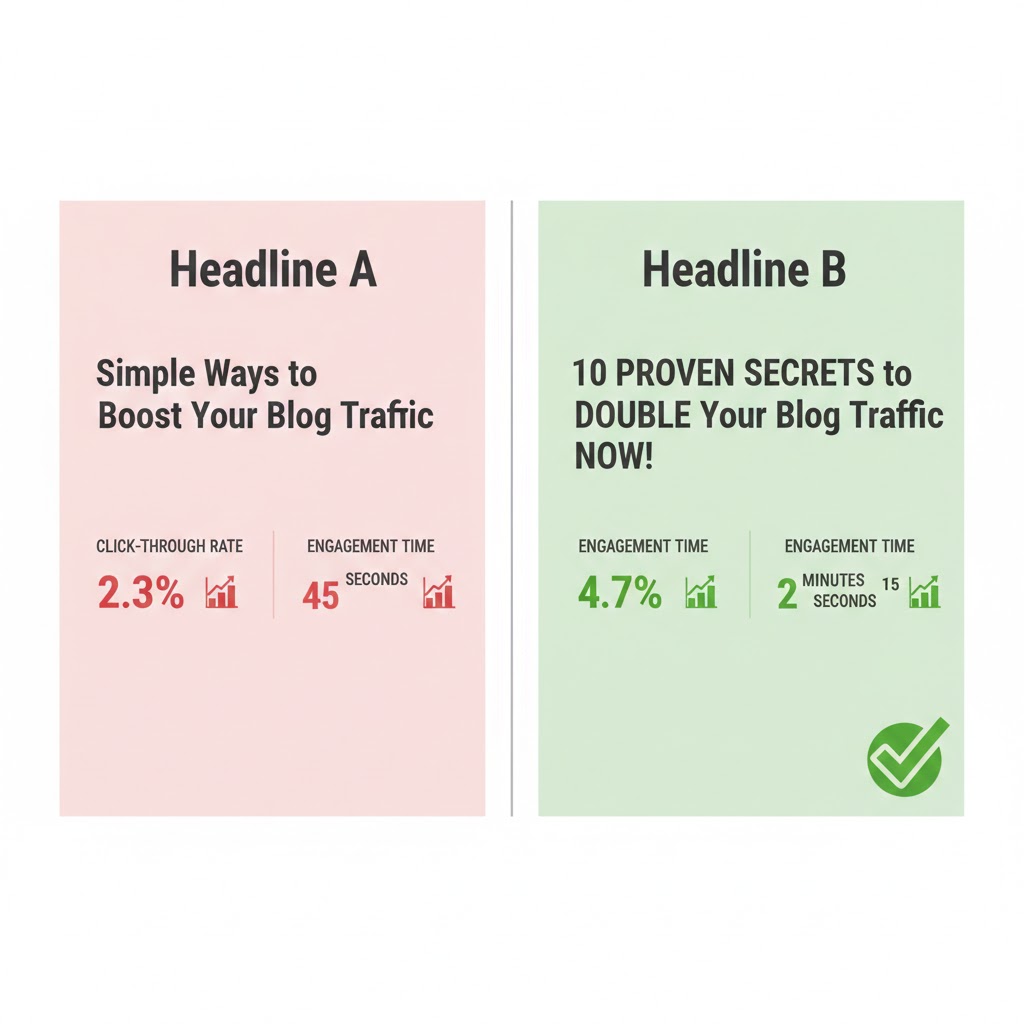
Even experienced copywriters can’t predict with certainty which headline will perform best. That’s why systematic testing is absolutely essential for anyone serious about improving their results.
Tools for headline testing have become increasingly sophisticated. CoSchedule’s Headline Analyzer provides instant feedback on word balance, length, and sentiment. BuzzSumo shows you which headlines are getting the most social shares in your niche. These tools aren’t perfect, but they provide valuable data points to inform your decisions.
The metrics you track depend on your goals. For SEO, you’re looking at click-through rates from search results and time on page. For social media, engagement metrics like shares and comments matter most. Email marketers obsess over open rates, though that’s become trickier with recent privacy updates.
Interpreting A/B test results requires patience and statistical rigor. Running a test for just a few hours won’t give you reliable data. You need adequate sample sizes and enough time to account for variables like day of the week or time of day. Generally, you want at least 100 conversions per variation before drawing conclusions.
AI tools for headline generation have improved dramatically. They can analyze your content and suggest dozens of variations in seconds. However, they work best as brainstorming partners rather than replacements for human judgment. Use them to generate ideas, then refine based on your knowledge of your audience and brand voice.
Common Headline Writing Mistakes to Avoid
Overpromising and underdelivering is the fastest way to destroy your credibility. If your headline claims “The Only SEO Guide You’ll Ever Need” but your article is a basic overview, readers will feel deceived. That emotional response is powerful and negative—they probably won’t trust your content again.
Keyword stuffing makes your headlines sound like they were written by a malfunctioning robot. “Effective Headline Writing Techniques 2025 Best Headline Writing Tips Headline Formulas 2025” might hit all your keywords, but no human would ever write or click on something that awkward.
Being too vague or generic is almost as bad as being dishonest. “Marketing Tips” tells readers nothing about what makes your content worth their time. Add specificity: “3 Email Marketing Experiments That Doubled Our Conversion Rate” gives readers clear reasons to click.
Ignoring audience intent leads to headlines that might technically be correct but completely miss the mark. Someone searching for “beginner guitar lessons” has very different needs than someone searching for “advanced jazz guitar techniques.” Your headline needs to signal immediately whether your content is right for them.
Mobile preview matters more than ever. Pull up your headline on an actual phone and see how it looks. Are the most important words visible, or did they get cut off? Does it still make sense at that smaller size? These practical considerations often get overlooked in the rush to publish.
Grammar and punctuation errors immediately undermine your authority. A typo in your headline signals carelessness, making readers question whether your actual content is reliable. Always proofread multiple times, ideally with fresh eyes after taking a break.
Industry-Specific Headline Strategies
B2B audiences respond to different appeals than B2C consumers. Business decision-makers want to see ROI, efficiency gains, and competitive advantages. A headline like “Reduce Customer Onboarding Time by 40% with These Process Changes” speaks directly to their priorities.
B2C approaches can be more emotionally driven and aspirational. “Feel Confident in Your Skin: A Dermatologist’s Summer Skincare Routine” promises transformation and expert guidance in a way that resonates with individual consumers.
E-commerce product headlines need to balance SEO with conversion optimization. Including specific product attributes helps both search engines and shoppers: “Organic Cotton Yoga Mat – Extra Thick, Non-Slip, Eco-Friendly” packs in searchable terms while highlighting key selling points.
News and journalism standards require accuracy above all else. While clickability matters for media organizations trying to survive in the digital age, misleading headlines damage credibility in ways that publications can’t afford. The best news headlines are both accurate and compelling, which is admittedly a difficult balance.
Educational content titles should clearly indicate the learning outcome and skill level. “Introduction to Python Programming for Complete Beginners” sets appropriate expectations, while “Advanced Machine Learning Algorithms” signals different prerequisites.
Entertainment and lifestyle headlines can be more playful and emotional. “The Cozy Mystery Novel That Kept Me Up All Night” works because entertainment is inherently subjective and personal. These headlines often perform well when they feel like recommendations from a friend.
Tools and Resources for Headline Writers
AI-powered headline generators like Copy.ai and Jasper can produce dozens of variations quickly. They’re particularly useful when you’re stuck or need to explore different angles. Remember that these tools work best when you provide detailed context about your audience and goals.
Analytics platforms like Google Analytics and Google Search Console show you which headlines are actually driving traffic and engagement. The data might surprise you—sometimes headlines you think are clever perform poorly, while straightforward ones exceed expectations.
A/B testing software ranges from simple email marketing platform features to sophisticated tools like Optimizely that let you test different headline variations on your website. The investment makes sense if you’re serious about optimization, though you can start with free options built into most email services.
Headline analyzers provide instant feedback, though they should be treated as guidelines rather than gospel. The Emotional Marketing Value Headline Analyzer from Advanced Marketing Institute assesses the emotional impact of your words, while Sharethrough’s Headline Analyzer evaluates engagement and impression quality.
Building a swipe file of headlines that catch your attention is one of the most valuable practices for improving your skills. When you see a headline that makes you click, save it. Over time, you’ll notice patterns in what works and develop a better instinct for crafting compelling headlines yourself.

Future Trends in Headline Writing
Artificial intelligence is reshaping how we create and optimize headlines, but it’s not replacing human creativity—at least not yet. The most effective approach combines AI’s analytical power with human understanding of nuance, emotion, and context. We’re seeing tools that can predict click-through rates with surprising accuracy, helping marketers refine their options before publishing.
Personalization at scale is becoming more sophisticated. Imagine headlines that automatically adjust based on the reader’s previous behavior, location, or interests. Some platforms are already experimenting with dynamic headlines that change for different audience segments, though this raises interesting questions about authenticity and consistency.
Interactive and dynamic headlines might sound futuristic, but we’re already seeing early examples. Headlines that update in real-time based on trending topics or user interactions could become more common. The challenge is implementing this without sacrificing the clarity and honesty that builds trust.
Multimodal content considerations mean thinking beyond just text. As visual search and voice assistants become more prevalent, headlines need to work across different formats. A headline optimized purely for text search might not work as well when someone asks Alexa or Siri for information.
Emerging platform requirements will continue to evolve as new social networks and content formats gain popularity. What works on TikTok differs from Instagram, which differs from emerging platforms we might not even know about yet. Staying adaptable and willing to experiment will be crucial.
Conclusion
Mastering effective headline writing techniques in 2025 isn’t about following rigid rules—it’s about understanding principles and adapting them to your specific audience and context. The headlines that perform best combine psychological insight, SEO optimization, and genuine value delivery in ways that feel natural and trustworthy.
Start by implementing these action steps immediately: audit your recent headlines to identify patterns in what performs well, create three variations for every important piece of content and test them, study headlines in your industry that generate high engagement, and build systems for continuous improvement rather than one-off optimizations.
Remember that even small improvements in click-through rates compound over time. A headline that converts 5% better doesn’t sound dramatic, but across hundreds or thousands of pieces of content, that difference becomes significant. The marketers who consistently outperform their competition aren’t necessarily more creative—they’re more systematic about testing, learning, and refining.
Your headlines are often the only chance you get to make an impression. Make them count. Start applying these techniques today, measure your results honestly, and keep iterating based on what the data tells you. The investment in developing this skill will pay dividends across every aspect of your marketing efforts for years to come.
