

Understanding Modern B2B Technology Marketing
The landscape of b2b technology marketing has transformed dramatically over the past decade. Gone are the days when cold calls and trade show booths dominated the playbook. Today’s b2b technology marketing approach relies on digital-first campaigns, content creation, and thought leadership, with artificial intelligence accelerating these changes faster than ever.
Business-to-business marketing now requires sophisticated strategies that address complex buying committees, longer sales cycles, and increasingly informed decision-makers. Understanding these shifts separates successful technology companies from those struggling to generate meaningful pipeline.
The Changing Face of Tech Buyers
Technology purchasing decisions no longer rest with a single executive. Modern buying committees involve six to ten decision-makers, each bringing four or five pieces of independently gathered information to discussions. This dramatic expansion of stakeholders fundamentally changes how marketers must approach their campaigns.
Younger generations now dominate purchasing decisions in unprecedented numbers. Millennials comprise 59 percent of technology buyers, with 30 percent serving as lead buyers for their organizations. These digital-native professionals favor self-service research and expect seamless online experiences throughout their evaluation process.
The implications extend beyond demographics. These buyers conduct extensive research before engaging with sales teams, often completing most of their journey independently. They compare multiple vendors, read peer reviews, consume educational content, and form shortlists before ever requesting a demo.
Why Traditional Approaches Fall Short
Broadcast tactics that once generated awareness now fail to resonate with sophisticated audiences. Generic messaging gets ignored. Mass email campaigns trigger spam filters. Cold outreach generates frustration rather than interest. The spray-and-pray methodology wastes resources while producing minimal results.
Technology buyers demand relevance. They expect vendors to understand their specific challenges, speak their industry language, and demonstrate clear value propositions. Anything less gets dismissed immediately in favor of competitors who excel at b2b technology marketing fundamentals.
Building Your Foundation: Strategy Before Tactics
Successful b2b technology marketing begins with strategic clarity rather than tactical execution. Companies that rush into campaigns without solid foundations inevitably waste budgets on activities that fail to generate meaningful outcomes.
Defining Your Ideal Customer Profile
Not every prospect deserves equal attention from your marketing team. Creating detailed buyer personas helps tailor strategies to specific needs and challenges of target audiences. This foundational work determines everything from messaging to channel selection to content topics.
Start by analyzing your most successful existing customers. What characteristics do they share? Which industries do they represent? What size companies derive maximum value from your solutions? Which roles champion purchases internally? Understanding these patterns reveals who you should pursue.
Consider both firmographic and behavioral attributes. Company size, revenue, technology stack, growth trajectory, and geographic location matter. So do engagement patterns, content consumption habits, preferred communication channels, and decision-making processes. Comprehensive profiles guide effective resource allocation.
Aligning Sales and Marketing Teams
Nothing undermines technology marketing faster than misalignment between departments. When sales and marketing operate independently, they create friction that confuses prospects and wastes opportunities. True alignment requires shared goals, transparent communication, and collaborative processes.
Establish common definitions for lead qualification stages. Marketing-qualified leads should meet specific criteria that sales agrees represent genuine opportunities. Sales-qualified leads should trigger defined follow-up processes. Service-level agreements between teams create accountability and eliminate finger-pointing.
Regular feedback loops improve campaign performance dramatically. Sales teams possess invaluable insights about prospect objections, competitive differentiators, and messaging effectiveness. Marketing teams provide data about campaign performance, content engagement, and channel effectiveness. Sharing these perspectives optimizes the entire revenue engine.
Account-Based Marketing: Precision Over Volume
Account-based marketing has emerged as the dominant strategy for technology companies pursuing enterprise customers. This focused approach directs resources toward prospects who best fit specific product or service offerings, dramatically improving conversion rates while reducing wasted spending.
Rather than casting wide nets hoping to catch anyone interested, ABM treats high-value accounts as individual markets deserving customized attention. Industry research shows 85 percent of programs achieve active engagement with selected accounts, while 74 percent see revenue growth. These results explain why this methodology continues gaining adoption.
The Three Tiers of ABM Programs
Organizations implement ABM at different scales depending on resources, objectives, and target account characteristics. One-to-one programs create completely unique campaigns for single, critically important accounts. These white-glove approaches demand significant investment but deliver exceptional results with strategic customers.
One-to-few programs group small numbers of similar accounts together, creating personalized campaigns for these clusters. This approach balances customization with efficiency, allowing teams to serve multiple accounts while maintaining relevance. Technology enables scalability without sacrificing personalization.
One-to-many programs leverage automation and data to personalize outreach for larger account lists. While less customized than other approaches, these campaigns still outperform generic demand generation by targeting defined segments with tailored messaging. Most organizations employ multiple ABM tiers simultaneously based on account value.
Implementing ABM Successfully
Effective ABM execution requires careful planning and disciplined execution. Begin by identifying target accounts that align with your ideal customer profile. Not every large company deserves ABM treatment—focus on those demonstrating genuine fit and revenue potential.
Research each target account thoroughly before launching campaigns. Understand their business challenges, competitive pressures, strategic initiatives, and technology environment. Identify key stakeholders across buying committees, including champions, influencers, decision-makers, and potential blockers. This intelligence informs messaging and tactics.
Create customized content that speaks directly to each account’s specific situation. Generic whitepapers and case studies lack impact compared to materials addressing their unique challenges. Personalized landing pages, custom presentations, and tailored demonstrations show genuine interest in solving their problems rather than simply making sales.
Content Strategy: Education Drives Engagement
Technology buyers consume enormous amounts of content during their research journeys. Companies that create valuable educational materials position themselves as trusted advisors rather than just vendors. This perception shift dramatically improves conversion rates and deal sizes.
Types of Content That Generate Results
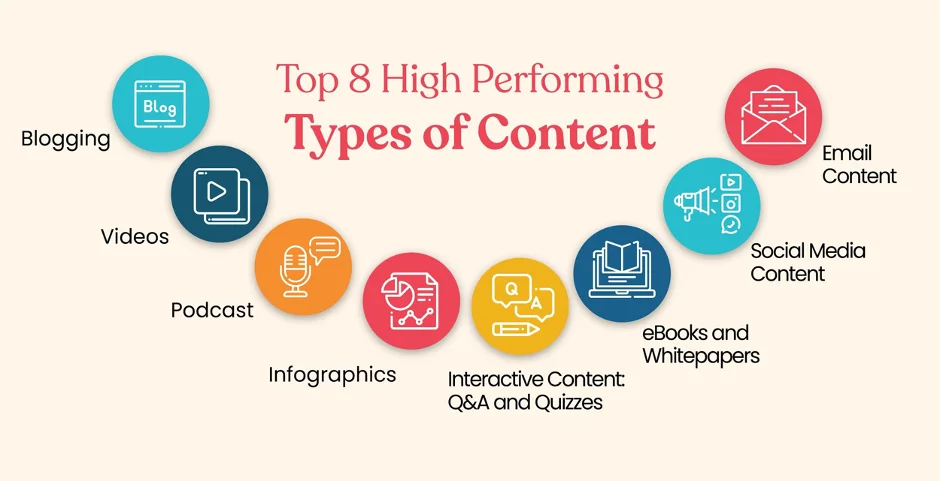
Different content formats serve different purposes throughout buyer journeys. Top-of-funnel content like blog posts, infographics, and social media updates build awareness while establishing thought leadership. These assets should educate rather than sell, focusing on industry trends, best practices, and emerging challenges.
Middle-funnel content helps prospects evaluate potential solutions. Detailed guides, comparison frameworks, and educational webinars provide tools for assessment without pushing specific products. This neutral positioning builds trust while subtly highlighting your differentiators.
Bottom-funnel content facilitates final decisions. Case studies demonstrating results, product demonstrations showing capabilities, and ROI calculators proving value accelerate deal closure. These materials answer specific questions that arise during procurement processes.
Distribution Channels That Reach Buyers
Creating excellent content means nothing without effective distribution. LinkedIn offers targeting capabilities that no other platform can match for reaching decision-makers. The platform enables precise audience segmentation based on job titles, company characteristics, and professional attributes.
Successful teams combine organic thought leadership, targeted paid campaigns, and genuine employee advocacy rather than relying solely on promotional messaging. This multifaceted approach builds credibility while maintaining visibility throughout extended sales cycles.
Content syndication extends reach beyond owned channels. Platforms host gated content like ebooks, videos, recorded webinars, whitepapers, research reports, and case studies, exposing materials to sector-specific audiences actively seeking information. This tactic generates qualified leads while building brand awareness.
Leveraging Artificial Intelligence
Currently, 68 percent of teams use AI to move faster while maintaining quality. However, the real opportunity lies in using technology to amplify uniquely human capabilities: building trust, solving complex problems, and creating memorable experiences.
Practical AI Applications
AI agents now handle numerous marketing tasks that previously consumed significant time. These autonomous systems conduct research, personalize outreach sequences, optimize campaign performance, and generate initial content drafts. This automation frees marketers to focus on strategy and creativity.
However, better technology won’t save mediocre teams—without skilled, empowered marketers, AI simply makes mediocrity faster and louder. Success requires combining technological capabilities with human judgment, creativity, and strategic thinking. Tools multiply talent rather than replacing it.
Predictive analytics powered by machine learning identifies accounts showing purchase intent before they engage directly. These signals enable proactive outreach at optimal moments, dramatically improving conversion rates. Intent data reveals which topics prospects research, which competitors they evaluate, and which buying stage they occupy.
Training Teams for AI Adoption
Over half of marketers say AI is already important in their roles, but 70 percent report their employers don’t provide generative AI training. This knowledge gap threatens competitive position as capabilities advance exponentially. Organizations investing in education now establish sustainable advantages.
Implement structured learning programs covering AI fundamentals, specific tool capabilities, ethical considerations, and practical applications. Encourage experimentation with new technologies in low-risk environments. Share successes and failures across teams to accelerate collective learning.
Create AI champions within marketing organizations. These specialists develop deep expertise, identify promising use cases, and help colleagues adopt new capabilities. Their guidance prevents wasted investment in unsuitable tools while maximizing value from appropriate technologies.
Video Marketing: The Visual Advantage
Video proves to be the most effective content type for technology marketers, offering versatile formats that work across multiple channels. From short social clips to comprehensive product demonstrations, visual content engages audiences more effectively than text alone.
Short-form videos particularly resonate with modern buyers scrolling through social feeds. These bite-sized pieces deliver quick insights, build personality, and drive engagement. Research shows short-form social videos produce the highest ROI, followed by testimonials, case studies, and product demonstrations.
Long-form educational content serves different purposes. Detailed tutorials, thought leadership interviews, and webinar recordings provide depth that establishes expertise. These assets remain valuable for extended periods, generating ongoing traffic and leads long after initial publication.
Customer testimonials and case study videos add authenticity that written materials cannot match. Hearing real customers describe challenges, selection processes, implementation experiences, and achieved results builds credibility. These social proof elements overcome skepticism during critical decision-making moments.
Experiential Marketing: Beyond Digital Channels
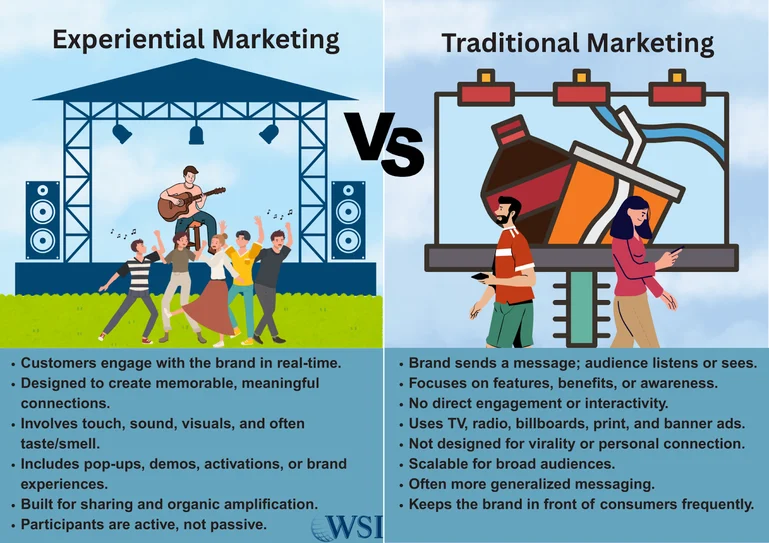
After years of digital-first everything, marketers are rediscovering the power of showing up, with 78 percent of professionals allocating budget to experiential marketing. In-person interactions build relationships and trust that virtual channels struggle to replicate.
Technology conferences, trade shows, and industry events provide concentrated access to target audiences. Executive roundtables, private dinners, and workshop sessions create intimate environments for meaningful conversations. These high-touch experiences differentiate brands in crowded markets.
Virtual events expanded dramatically during recent years, offering scale impossible with physical gatherings. Webinars, online conferences, and digital workshops reach global audiences efficiently. Hybrid approaches combining physical and virtual elements maximize both reach and depth.
Product demonstrations and proof-of-concept implementations represent powerful experiential tactics. Letting prospects actually use solutions removes uncertainty and builds confidence. Hands-on experience beats any presentation or document for proving capability and fit.
Measuring What Matters: Analytics and Attribution
Technology marketers face constant pressure to demonstrate return on investment. Sophisticated measurement systems connect marketing activities to revenue outcomes, justifying budgets while identifying optimization opportunities.
Key Performance Indicators
Different metrics matter at various funnel stages. Awareness metrics like website traffic, social engagement, and content downloads indicate top-of-funnel health. Consideration metrics including demo requests, trial signups, and proposal requests show middle-funnel effectiveness.
Revenue metrics ultimately determine success. Pipeline generated, opportunity win rates, deal sizes, and customer lifetime value reveal true marketing contribution. Multi-touch attribution models distribute credit appropriately across touchpoints rather than oversimplifying to first or last interactions.
Account engagement scores aggregate multiple signals into composite measures of interest and intent. These scores combine website visits, content downloads, email responses, social interactions, and other behaviors. Rising scores trigger appropriate follow-up actions from marketing and sales teams.
Building Attribution Models
Effective attribution requires integrated data from multiple systems. Customer relationship management platforms, marketing automation tools, advertising platforms, and analytics packages must share information seamlessly. Data integration challenges often prevent accurate measurement.
Establish clear definitions for conversion events throughout buyer journeys. What constitutes a qualified lead? When does an opportunity enter your pipeline? Which actions indicate serious intent versus casual interest? Consistent definitions enable meaningful tracking.
Test attribution models against actual results to validate accuracy. Compare predicted revenue contribution to closed deals. Adjust weightings based on observed patterns. Attribution remains part science, part art—continuous refinement improves reliability over time.
Budget Allocation: Investing Wisely
Modern b2b technology marketing leaders are abandoning underperforming channels entirely while dominating the few that matter. This precision approach recognizes that spreading resources thin across numerous platforms rarely delivers optimal results.
Technology marketing budgets typically span paid advertising, content creation, marketing technology platforms, events, and personnel. Optimal allocation depends on target audience characteristics, sales cycle length, average deal size, and competitive dynamics. No universal formula exists.
Start with proven channels generating consistent results, then systematically test new opportunities. Allocate 70 percent of budget to reliable tactics, 20 percent to promising experiments, and 10 percent to speculative bets. This portfolio approach balances stability with innovation.
Monitor channel performance rigorously. Budgets shift fast based on what’s actually working, with successful b2b technology marketing teams reallocating resources quarterly or even monthly. Agility beats rigid annual planning in fast-changing technology markets.
Future Trends Shaping the Industry
The only constant in technology marketing remains change itself. Several emerging trends will influence strategies throughout the coming years.
Privacy regulations continue tightening globally, restricting data collection and usage. Marketers must adapt to cookie-less environments, first-party data strategies, and consent-based relationships. These constraints actually benefit organizations prioritizing genuine value creation over surveillance tactics.
Buying committee complexity keeps increasing as more stakeholders participate in technology decisions. Marketers must engage diverse personas with varying concerns, priorities, and evaluation criteria. Multi-threaded approaches that address entire buying groups replace single-threaded champion-dependent strategies.
Generative AI capabilities expand rapidly, enabling unprecedented personalization and automation. However, human creativity, strategic thinking, and relationship building remain irreplaceable. The winning formula combines technological leverage with authentic human connection.
Conclusion: Principles for Sustainable Success
Effective b2b technology marketing requires balancing numerous competing priorities. Long-term brand building versus short-term lead generation. Broad awareness versus targeted account penetration. Human touchpoints versus scalable automation. Digital efficiency versus experiential impact.
No single tactic delivers complete success. Rather, integrated programs combining multiple approaches generate consistent results. Account-based precision, educational content, AI augmentation, video storytelling, experiential engagement, and rigorous measurement work together synergistically.
The technology sector moves faster than most industries, requiring continuous learning and adaptation. Strategies that worked last year may fail this year. Tactics generating leads today might become ineffective tomorrow. Sustained success in b2b technology marketing demands intellectual curiosity, experimental mindset, and operational agility.
Ultimately, technology marketing succeeds by serving buyers authentically. Understanding their challenges, providing genuine value, building trusted relationships, and delivering promised outcomes creates sustainable competitive advantage that transcends any specific tactic or trend.
