

What Is Critical Mass and Why Does It Matter?
Have you ever wondered why some products suddenly explode in popularity while others fade away? The answer often lies in a concept borrowed from nuclear physics: critical mass. This powerful principle explains the mysterious moment when enough people adopt an idea, technology, or innovation that its growth becomes unstoppable.
In its original scientific context, critical mass represents the minimum amount of fissile material necessary to achieve a self-sustaining fission chain reaction. However, this concept has evolved far beyond laboratory walls. Today, understanding how to achieve this threshold separates successful ventures from those that never gain traction.
The Science Behind Social Critical Mass
The transition from nuclear physics to social dynamics wasn’t accidental. Social scientists define critical mass as a sufficient number of adopters of a new idea, technology, or innovation so that adoption becomes self-sustaining and creates further growth. This transformation happens at a tipping point where momentum shifts dramatically.
Game theorist Thomas Schelling and sociologist Mark Granovetter pioneered this application in the early 1970s. Their groundbreaking work revealed patterns in human behavior that mirror physical phenomena. When enough individuals embrace something new, they create a chain reaction that pulls others along naturally.
How Adoption Patterns Create Momentum
The journey toward this threshold follows predictable stages. Initially, early adopters take risks on unproven concepts. These pioneers face uncertainty, limited features, and skeptical peers. Yet their commitment plants essential seeds for future expansion.
As numbers grow, something remarkable occurs. Each new participant adds value for existing users while simultaneously attracting potential adopters. This creates positive feedback loops where growth accelerates exponentially rather than incrementally. The system reaches a point where it no longer needs external support to survive.
Critical Mass in Business Strategy
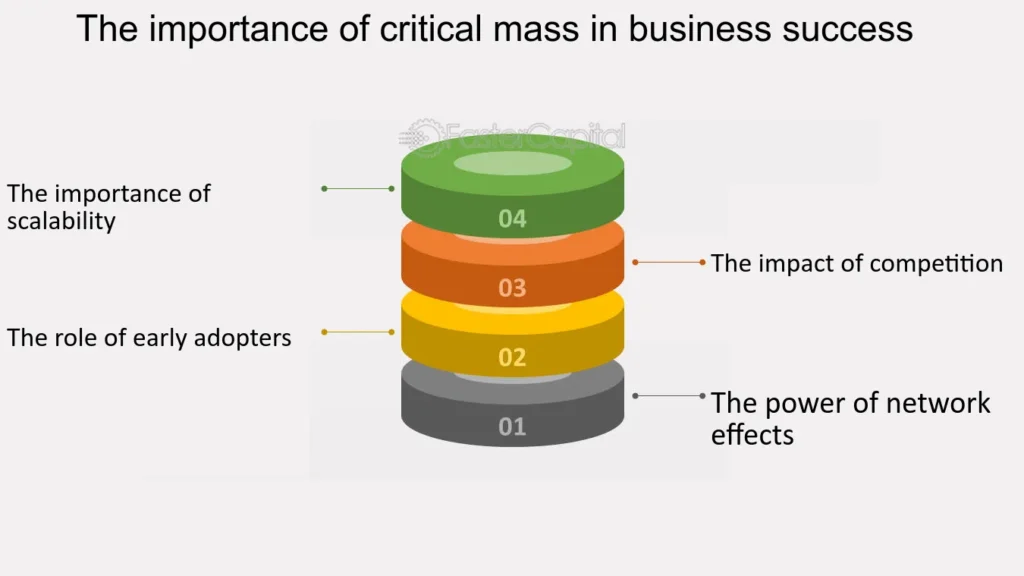
Modern enterprises obsess over reaching this pivotal moment for good reason. In business terminology, critical mass denotes a crucial stage where a company reaches self-sustaining viability. Before this point, companies burn through investment capital while building their user base. After crossing this line, revenue and organic growth sustain operations independently.
Real-World Business Examples
Facebook’s evolution perfectly illustrates this principle in action. Initially limited to Harvard students, the platform strategically expanded to other universities, then high schools, and eventually the general public. For the first 36 months, Facebook had no revenue streams and focused entirely on growing its user base. This patient approach paid enormous dividends once monetization began in 2007.
Amazon provides another compelling case study. Through strategic investments and continuous expansion, the e-commerce giant transcended the need for constant external funding. Their operational efficiency and customer loyalty created a self-reinforcing cycle that continues driving growth today.
Instagram’s origin story reveals the importance of recognizing success patterns. Originally called Burbn, the app struggled as a location-sharing platform. Founder Kevin Systrom noticed users loved the photo filters more than other features. By pivoting to focus exclusively on photo-sharing with filters, Instagram found its path to explosive adoption.
Technology Platforms and Network Effects
Technology companies face unique challenges when pursuing this threshold. Social media platforms, marketplaces, and communication tools derive their value primarily from network effects. A telephone becomes more useful when more people own telephones. Similarly, a social network with ten users offers minimal value, while one with ten million becomes indispensable.
The fax machine existed in various forms for almost 150 years before reaching critical mass in 1987, when Americans began assuming everyone else owned one. Falling prices, technological improvements, and existing phone line infrastructure finally converged to trigger widespread adoption.
This same pattern repeats across industries. Ride-sharing services needed enough drivers and passengers in each city before becoming reliable. Online marketplaces require sufficient buyers and sellers before transactions flow naturally. Video conferencing tools remained niche products until pandemic conditions pushed simultaneous mass adoption.
The Role of Early Adopters
Influential early users accelerate the path toward this threshold significantly. When respected figures embrace new platforms, their followers pay attention. This celebrity effect explains why startups pursue partnerships with well-known personalities and organizations.
However, quality matters alongside quantity. Recent research shows that committed minorities can trigger major shifts even when representing small percentages of total populations. Studies indicate that committed minorities as small as 0.3 percent of a population can impose their viewpoint under certain conditions.
Business Models That Demand Rapid Growth
Some enterprises require reaching this milestone quickly or risk failure entirely. These business models share common characteristics: high fixed costs, low marginal costs, and value that scales dramatically with user numbers.
Budget airlines exemplify this challenge perfectly. Airlines face high fixed costs including planes, airport space, and staff, requiring them to sell nearly all seats to achieve profitability. Without sufficient passenger volume, these carriers burn through capital reserves before establishing sustainable operations.
Auction sites face similar dynamics. Without adequate buyers, sellers find little reason to list products. Without diverse products, buyers shop elsewhere. Breaking this chicken-and-egg dilemma requires aggressive investment in both sides simultaneously until momentum becomes self-perpetuating.
Multiplayer online games need sufficient concurrent players to deliver engaging experiences. A battle royale game with only 1,000 total players would quickly become repetitive and boring. The same game with 350 million players, like Fortnite achieved, offers endless variety and excitement.
Strategies for Reaching the Tipping Point
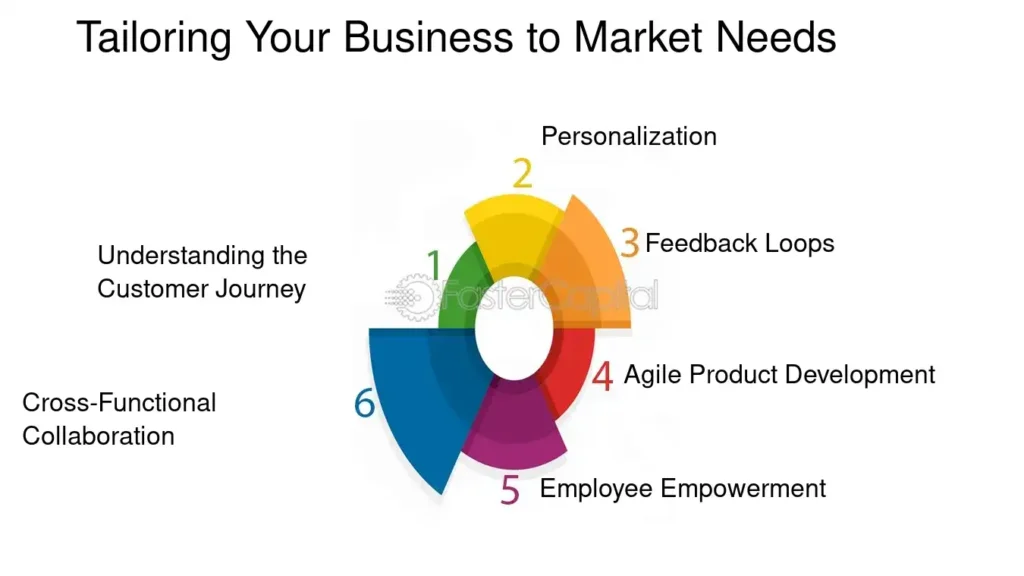
Successful companies employ various tactics to accelerate their journey toward sustainability. These approaches recognize that different contexts require different solutions.
Focus on Specific Niches First
Rather than pursuing mass markets immediately, many successful platforms start with tightly defined communities. Facebook began at a single university before expanding methodically. This concentrated approach builds density within smaller groups before branching outward.
This strategy delivers multiple benefits. Smaller communities reach sustainable thresholds faster than broad audiences. Early users feel special belonging to exclusive groups. Word-of-mouth spreads more effectively within cohesive communities than across fragmented populations.
Provide Value Before Critical Mass
Smart platforms offer utility even before achieving full network effects. This “come for the tool, stay for the network” approach gives early adopters reasons to join beyond future potential. Photo editing tools, content creation features, or single-player modes keep users engaged while populations grow.
This principle applies beyond technology. Farmers markets can succeed with limited vendors if they offer unique products unavailable elsewhere. Subscription services provide content libraries that deliver immediate value while building subscriber bases.
Leverage Technology and Automation
Modern technology accelerates the path toward sustainability dramatically. Cloud computing eliminates massive infrastructure investments that once created barriers. Social media advertising reaches targeted audiences at scales impossible through traditional channels.
Viral marketing harnesses network effects intentionally. When existing users share content or invite friends, they become unpaid marketers driving exponential growth. Referral incentives amplify this effect by rewarding both parties for bringing new participants into the ecosystem.
Maintaining Momentum After the Threshold
Reaching this pivotal moment represents a beginning rather than an ending. Companies must avoid complacency once self-sustaining growth begins. Market conditions evolve, competitors emerge, and user expectations rise continuously.
Operational efficiency becomes increasingly important as scale increases. Streamlining processes, optimizing resource utilization, and adopting innovative approaches help maintain competitive advantages. Companies that rest on past achievements often find themselves overtaken by hungrier competitors.
Sustainable growth requires balancing expansion with quality. Rapid growth can strain infrastructure, dilute culture, and compromise user experiences. Finding the right pace prevents overextension while capitalizing on momentum.
The Numbers Game: How Many Is Enough?
Researchers debate the precise percentage required to trigger widespread adoption. Controlled experiments found a threshold of 25 percent of a population sufficient to overturn established social conventions. Other studies suggest lower numbers work under specific conditions.
The truth likely varies by context. Technology platforms may need different percentages than social movements. Products with strong network effects probably require higher thresholds than those offering independent value. Market density, competitor presence, and cultural factors all influence these calculations.
Rather than seeking universal answers, successful organizations monitor their own progress toward sustainability. Key performance indicators reveal whether momentum increases or stalls. Customer acquisition costs, retention rates, and engagement metrics signal proximity to the tipping point.
Beyond Business: Social Movements and Change
This concept extends far beyond commercial applications. Social movements rely on similar dynamics to create lasting change. When enough people embrace new ideas, they shift cultural norms and challenge existing power structures.
The concept originated in epidemiology during the 1920s, where researchers studied disease transmission patterns. An infection reaching this threshold spreads uncontrollably through populations. The 1919 flu epidemic demonstrated this principle tragically, eventually claiming more lives than World War I.
Modern social movements harness these dynamics intentionally. The #MeToo movement gained unstoppable momentum when sufficient people shared their experiences publicly. Environmental initiatives gain traction as more individuals adopt sustainable practices and influence their social circles.
Future Trends and Considerations
The digital age transforms how organizations approach this threshold. Artificial intelligence, blockchain technology, and evolving platforms create new opportunities and challenges. Companies must adapt strategies to leverage emerging tools while maintaining focus on fundamental principles.
Sustainability concerns increasingly influence consumer decisions. Organizations incorporating environmentally conscious practices may find paths to this milestone easier as consumer values shift. Eco-friendly approaches could become competitive advantages rather than expensive obligations.
Globalization means companies can pursue international markets simultaneously. However, this approach requires understanding cultural differences and local market conditions. What works in one region might fail elsewhere despite similar economic conditions.
Conclusion: The Path Forward
Understanding this pivotal threshold provides entrepreneurs, marketers, and leaders with powerful frameworks for decision-making. Whether launching new products, building communities, or driving social change, recognizing the importance of this moment shapes effective strategies.
Success requires patience during early stages when progress feels slow. It demands strategic thinking about resource allocation, user experience, and market positioning. Most importantly, it necessitates commitment to building something genuinely valuable that people want to share with others.
The journey toward self-sustaining growth challenges every venture differently. Some reach this point quickly through perfect timing and execution. Others struggle for years before finally achieving breakthrough momentum. But those who understand these principles significantly improve their odds of crossing that invisible line where everything changes.
