

Digital advertising has evolved from spray-and-pray mass marketing to precision-targeted, measurable campaigns where every dollar spent connects directly to business outcomes. This transformation centers on performance marketing principles that prioritize trackable results over vanity metrics like impressions or reach. Within this results-driven ecosystem, pay-per-click advertising stands out as the quintessential performance channel, offering unmatched control, transparency, and accountability.
PPC performance marketing represents the intersection of paid advertising and outcome-based measurement. Rather than paying for ad placements regardless of results, you invest in campaigns specifically structured to drive conversions, generate revenue, and deliver positive return on investment. Every click costs money, every conversion gets tracked, and every campaign decision rests on data showing what actually works versus what merely looks impressive in surface-level reports.
The appeal of this approach extends across business types and sizes. E-commerce operations track revenue directly attributable to specific ads and keywords. B2B companies measure qualified leads and pipeline contribution. Service businesses count appointment bookings and phone calls. Regardless of your conversion goal, PPC platforms provide granular data connecting advertising spend to business outcomes, enabling continuous optimization that traditional advertising channels simply cannot match.
This comprehensive guide reveals proven strategies for building and scaling profitable PPC campaigns grounded in performance marketing principles. You’ll learn how to structure campaigns for measurable results, implement conversion tracking that captures true value, optimize bids based on actual performance data, and scale successful campaigns while maintaining efficiency. Whether you’re launching your first paid search campaign or managing multi-million dollar budgets across multiple platforms, these strategies will help you maximize return on advertising investment through data-driven decision making.
Understanding PPC Performance Marketing
The definition of performance marketing principles centers on accountability and measurable outcomes. Unlike traditional advertising where you pay for exposure regardless of results, performance marketing ties spending directly to specific actions—clicks, leads, purchases, or other valuable conversions. This outcome-based approach shifts risk from advertisers to channels, ensuring you only pay when campaigns deliver value rather than just visibility.
How PPC fits into the performance marketing model perfectly aligns with these principles. Every time someone clicks your ad, you pay. When visitors complete desired actions after clicking, you track those conversions and attribute revenue. This direct connection between spend and results enables precise ROI calculation impossible with awareness-focused channels. You know exactly what you paid for each customer, lead, or conversion, allowing data-driven budget allocation and optimization decisions.
Pay-for-results versus pay-for-impressions represents a fundamental philosophical difference in advertising approach. Traditional display advertising charges based on impressions—how many times your ad appears regardless of whether anyone notices or acts. PPC charges only when users engage by clicking. This creates immediate accountability since you’re not paying for ads that people ignore. More importantly, when combined with conversion tracking, PPC becomes truly performance-based since you can calculate exactly how much revenue or value each advertising dollar generates.
Key performance indicators that matter extend beyond simple clicks to measure actual business impact. Click-through rate indicates ad relevance and appeal. Conversion rate reveals landing page effectiveness at turning visitors into customers. Cost per acquisition shows how much you’re spending to gain each new customer. Return on ad spend quantifies revenue generated per dollar invested. These metrics collectively paint a complete picture of campaign performance, guiding optimization efforts toward activities that genuinely drive business results.
The role of data and analytics cannot be overstated in performance marketing. Every click, conversion, and customer action generates data that informs future decisions. This information reveals which keywords drive valuable traffic, which ad copy resonates with audiences, which landing pages convert effectively, and which audience segments deliver the best ROI. Mining this data systematically transforms PPC from guesswork into a scientific process of hypothesis testing, measurement, and optimization.
Core Components of PPC Performance Marketing
Goal Setting and KPI Definition
Defining clear, measurable objectives forms the foundation of effective performance campaigns. Vague goals like “increase brand awareness” or “get more traffic” provide no framework for optimization decisions. Specific objectives like “generate 100 qualified leads at $50 CPA or lower” or “achieve 4:1 ROAS on product sales” create clear targets that guide strategy and enable success measurement. Without explicit goals tied to business outcomes, you cannot determine whether campaigns succeed or fail.
Primary versus secondary conversion goals acknowledge that customer journeys involve multiple steps. Your primary goal might be completed purchases, but secondary goals like newsletter signups, product page views, or add-to-cart actions indicate progress toward ultimate conversion. Tracking these micro-conversions provides optimization signals even when primary conversions occur infrequently, particularly valuable for businesses with longer sales cycles or higher-priced products.
Revenue-based versus lead-based KPIs depend on your business model and sales process. E-commerce operations can track actual revenue generated by each campaign, calculating precise ROAS. B2B companies with complex sales cycles often optimize for qualified leads, assigning estimated values based on historical lead-to-customer conversion rates. Understanding which KPIs matter most for your specific situation prevents optimizing for metrics that don’t correlate with actual business success.
Customer lifetime value considerations elevate performance analysis beyond first-purchase metrics. Acquiring a customer who makes a single $50 purchase differs dramatically from acquiring one who spends $500 over three years. Factoring LTV into campaign optimization allows profitable customer acquisition at CPAs that might seem unprofitable when only considering initial transaction value. This long-term perspective transforms how you evaluate performance and allocate budgets.
Setting realistic performance benchmarks requires industry research and historical data analysis. If your industry averages 3% conversion rates and $75 CPA, expecting 10% conversion rates and $20 CPA sets you up for disappointment. Research competitive benchmarks, analyze your own historical performance if available, and set achievable initial targets that you can improve through optimization rather than unrealistic goals that guarantee failure.
Conversion Tracking Implementation
Setting up conversion tracking pixels represents the most critical technical foundation for performance campaigns. Without accurate conversion tracking, you’re flying blind—unable to determine which campaigns, keywords, or ads actually drive results. Every major advertising platform provides conversion tracking pixels or tags that monitor when visitors complete valuable actions after clicking your ads. Implementing these tracking mechanisms correctly ensures the data accuracy that performance optimization requires.
Google Ads conversion tracking involves creating conversion actions for each valuable outcome—purchases, form submissions, phone calls, app downloads—then adding tracking code to confirmation pages or triggering events when actions complete. This implementation captures when conversions occur, which ads and keywords drove them, and the revenue value generated. Without this connection between ads and outcomes, optimization becomes impossible since you cannot identify which elements perform well versus poorly.
Facebook and Meta Pixel implementation follows similar principles, placing tracking code on your website that monitors visitor actions and reports conversions back to Meta’s advertising platform. The pixel tracks not just conversions but also page views, add-to-cart actions, and other engagement signals that inform Meta’s algorithm about which users are most likely to convert. Proper pixel implementation dramatically improves campaign performance by enabling Meta to optimize ad delivery toward users with the highest conversion probability.
Enhanced conversions and server-side tracking represent advanced implementations that improve accuracy in privacy-focused environments. Browser-based tracking faces increasing limitations from privacy regulations, ad blockers, and cookie restrictions. Server-side tracking sends conversion data directly from your server to advertising platforms, bypassing browser limitations while maintaining privacy compliance. Enhanced conversions hash first-party data like email addresses to improve conversion matching without compromising user privacy.
Campaign Structure for Performance
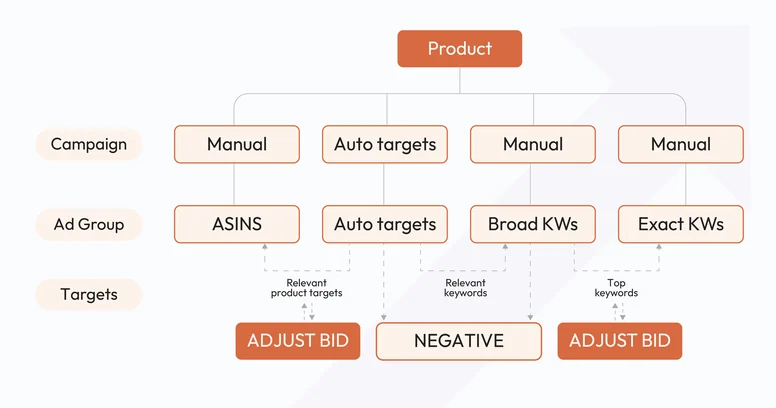
Account organization best practices establish logical hierarchies that enable efficient management and optimization. Well-structured accounts group campaigns by business objective, product category, or target audience. Within campaigns, ad groups segment by closely related keywords or audience characteristics. This organization allows bid adjustments, budget allocation, and optimization at appropriate levels rather than making broad changes that affect unrelated campaign elements.
Campaign types and selection criteria match advertising formats to campaign goals and target audiences. Search campaigns capture high-intent users actively seeking solutions. Display campaigns build awareness and reach remarketing audiences. Shopping campaigns showcase products directly in search results. Video campaigns engage audiences with visual storytelling. Selecting appropriate campaign types for each objective maximizes performance by aligning format with user intent and campaign purpose.
Ad group structure for optimization balances granularity with manageability. Tightly themed ad groups containing closely related keywords enable more relevant ads and landing pages, improving Quality Scores and conversion rates. However, excessive granularity creates management overhead without proportional benefit. Finding the right balance—typically 10-20 keywords per ad group, grouped by intent and theme—provides sufficient control without overwhelming complexity.
Audience segmentation strategies divide target markets into groups with distinct characteristics, needs, or behaviors. Demographic segments like age and income influence purchasing behavior. Geographic segments account for regional differences. Behavioral segments group users by past actions—website visitors, past purchasers, abandoned cart users. Creating campaigns or ad groups targeting specific segments enables customized messaging and bid strategies appropriate for each audience.
Geographic and demographic targeting focuses advertising on audiences most likely to convert. If your business only serves specific regions, geographic targeting prevents wasted spend on irrelevant audiences. Demographic targeting adjusts bids based on age, gender, household income, or parental status when these factors correlate with conversion probability. This precision ensures budgets concentrate on the most valuable potential customers rather than dispersing across less-qualified audiences.
Strategic Campaign Planning
Audience Research and Targeting
Customer persona development creates detailed profiles of ideal customers, informing targeting decisions and messaging strategies. Comprehensive personas include demographic information, pain points, goals, objections, preferred communication styles, and purchase decision factors. These profiles guide keyword selection, ad copy creation, landing page design, and offer development, ensuring all campaign elements resonate with target audiences rather than generic approaches that appeal to no one specifically.
Intent-based targeting strategies align campaigns with user search intent and purchase readiness. High-intent keywords indicate immediate purchase interest—”buy,” “best price,” “near me”—while informational keywords suggest early research phases. Structuring campaigns around intent levels enables appropriate messaging and conversion goals for each stage. Bottom-funnel campaigns with transactional keywords focus on immediate conversion, while top-funnel campaigns nurture awareness and consideration.
In-market audience identification leverages platform data about users actively researching specific product or service categories. Google, Facebook, and other platforms analyze browsing behavior, search history, and engagement patterns to identify users showing purchase intent signals. Targeting these in-market audiences improves conversion rates since you’re reaching people already interested in your category rather than attempting to generate interest from scratch.
Custom audience creation uses your first-party data—customer lists, website visitors, app users—to target known prospects and customers. Uploading customer email lists enables remarketing to past purchasers or excluding them from acquisition campaigns. Website visitor audiences allow remarketing to people who’ve engaged with your content. These custom audiences typically deliver the highest conversion rates and lowest CPAs since you’re targeting warm prospects already familiar with your brand.
Remarketing list segmentation divides past visitors into groups based on specific behaviors or characteristics. Users who abandoned shopping carts differ from those who only viewed product pages. Past purchasers warrant different messaging than first-time visitors. Creating distinct remarketing lists for each segment enables customized ads addressing specific objections or encouraging specific next actions appropriate for each group’s position in the customer journey.
Keyword Research for Performance
High-intent keyword identification focuses on search terms indicating immediate purchase readiness. These keywords include explicit purchase signals—”buy,” “purchase,” “order,” “best price,” “near me,” “free shipping.” Users searching these terms want solutions now, making them ideal targets for conversion-focused campaigns. Prioritizing budget toward high-intent keywords concentrates spending on audiences most likely to convert immediately rather than just browsing.
Commercial versus informational keywords represent fundamentally different user intents requiring different campaign approaches. Commercial keywords like “accounting software for small business” indicate comparison and evaluation, suggesting users are close to purchase decisions. Informational keywords like “how to do accounting” represent early research, where users seek education rather than immediate solutions. Matching campaigns and messaging to keyword intent improves relevance and conversion performance.
Long-tail keyword opportunities often deliver better performance than competitive head terms despite lower search volumes. While “running shoes” faces intense competition and high costs, “best waterproof trail running shoes for wide feet” targets a specific niche with clearer intent. These longer, more specific keywords typically convert better and cost less because they face less competition while attracting more qualified traffic.
Negative keyword strategy prevents wasted spend on irrelevant searches. Without negative keywords, your ads might appear for tangentially related but unsuitable queries. If you sell premium products, negative keywords excluding “cheap,” “free,” or “used” prevent clicks from price-sensitive searchers unlikely to convert. Regular negative keyword maintenance based on search term reports ensures budgets concentrate on relevant, qualified traffic.
Platform-Specific PPC Performance Strategies
Google Ads Performance Marketing
Search campaigns optimization represents the core of most performance marketing strategies on Google. These text ads appear when users search relevant keywords, capturing high-intent traffic actively seeking solutions. Optimization focuses on keyword selection, match type refinement, negative keyword addition, ad copy testing, and Quality Score improvement. High-performing search campaigns combine relevant keywords, compelling ad copy, optimized landing pages, and appropriate bid strategies to maximize conversions while controlling costs.
Shopping campaigns for e-commerce showcase products directly in search results with images, prices, and merchant names. These campaigns require product feed optimization ensuring accurate titles, descriptions, images, and attributes. Shopping campaign success depends on competitive pricing, compelling product data, negative keyword application, and bid management based on product profitability. For e-commerce businesses, Shopping campaigns often deliver the highest ROAS due to their visual nature and transactional focus.
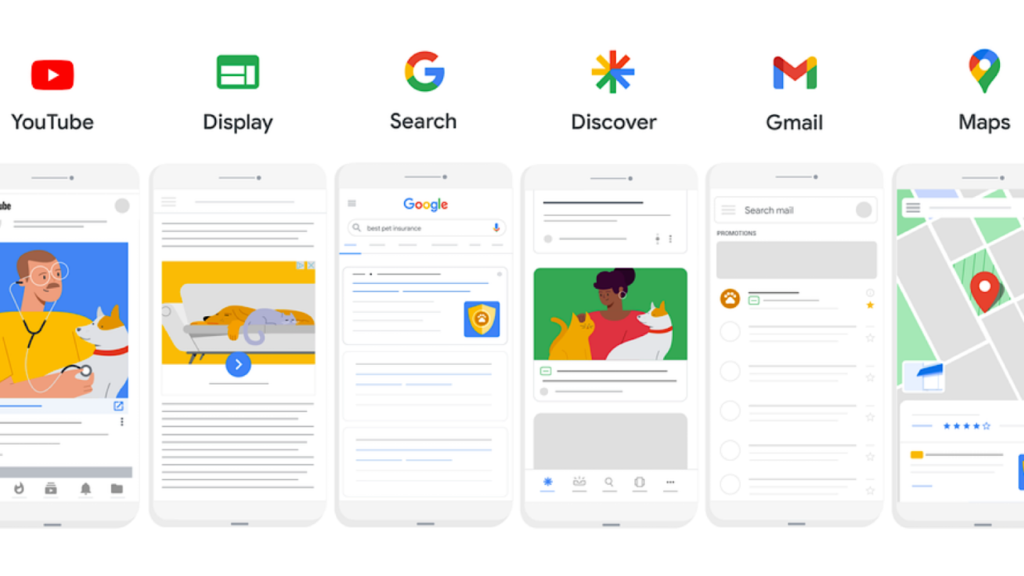
Performance Max campaigns represent Google’s newest automated campaign type, using machine learning to optimize ad delivery across all Google properties—Search, Display, YouTube, Gmail, Discover. These campaigns require quality creative assets, clear conversion goals, and audience signals but then automate targeting, bidding, and placement decisions. Early results show strong performance when provided sufficient conversion data and quality creative assets, though they offer less transparency and control than traditional campaign types.
Display remarketing strategies re-engage past website visitors with visual ads across Google’s Display Network. Effective remarketing segments audiences by behavior—product viewers, cart abandoners, past purchasers—and serves customized messages addressing each segment’s specific position in the customer journey. Display remarketing typically delivers lower costs and higher conversion rates than cold prospecting since you’re targeting warm audiences already familiar with your brand.
Smart Bidding strategies leverage Google’s machine learning to automate bid optimization toward your conversion goals. Target CPA automatically adjusts bids to achieve your specified cost-per-acquisition target. Target ROAS optimizes for revenue return goals. Maximize Conversions and Maximize Conversion Value prioritize volume or value respectively within budget constraints. These automated strategies often outperform manual bidding once provided sufficient conversion data for the algorithm to learn from.
Facebook and Meta Ads Performance
Conversion campaign objectives explicitly optimize ad delivery toward users most likely to complete specific actions—purchases, leads, registrations. Meta’s algorithm analyzes user behavior patterns to identify characteristics of people who convert, then prioritizes showing ads to similar users. This optimization dramatically improves conversion efficiency compared to objectives focused on reach, traffic, or engagement that don’t align with business outcomes.
Advantage Plus shopping campaigns automate campaign setup and optimization for e-commerce businesses, similar to Google’s Performance Max. These campaigns use machine learning to identify high-value customers, optimize creative combinations, and adjust budgets toward best-performing elements. They require quality product catalogs and pixel data but then automate most campaign management decisions, often delivering strong results with minimal hands-on optimization.
Catalog sales optimization leverages product catalogs to dynamically show relevant products to users based on browsing behavior and interests. Dynamic ads automatically display products users viewed on your website, abandoned in carts, or might interest them based on similar users’ behavior. This personalization improves relevance and conversion rates by showing each user products specifically matched to their demonstrated interests.
Lead generation campaigns use native forms that capture information without requiring users to leave Facebook or Instagram. This frictionless experience typically increases conversion rates versus directing traffic to external landing pages. Lead gen campaigns work particularly well for B2B companies, service businesses, and any advertiser seeking contact information rather than immediate purchases.
Measuring and Scaling Success
Essential Metrics and KPIs
Click-through rate indicates ad relevance and appeal to target audiences. Low CTR suggests ads don’t resonate with the audience seeing them, often indicating targeting problems or weak ad copy. High CTR demonstrates that your ads successfully attract attention and interest from intended audiences. While CTR alone doesn’t guarantee conversions, it represents the first step—getting users to engage with your advertising.
Conversion rate measures landing page effectiveness at turning traffic into customers or leads. Strong conversion rates indicate message match between ads and landing pages, compelling offers, and optimized user experiences. Poor conversion rates despite good CTR suggest disconnects between what ads promise and what landing pages deliver, technical problems preventing conversions, or targeting audiences who aren’t actually qualified despite clicking.
Cost per acquisition shows exactly what you’re paying for each new customer or qualified lead. CPA directly connects advertising spend to business outcomes, enabling clear ROI calculations. Tracking CPA trends over time reveals whether campaigns are becoming more or less efficient, guiding budget allocation toward best-performing elements while identifying underperformers requiring optimization or elimination.
Return on ad spend quantifies revenue generated per advertising dollar invested. Four-to-one ROAS means you earn four dollars for every dollar spent on advertising. This metric directly demonstrates advertising profitability, though it should be evaluated alongside profit margins to ensure revenue returns actually yield profitable outcomes. ROAS targets vary dramatically by industry, product margins, and business models.
Conclusion
Mastering PPC performance marketing requires shifting from vanity metrics to outcome-based measurement, from intuition-based decisions to data-driven optimization, and from campaign-and-forget approaches to continuous testing and refinement. The strategies outlined here provide a comprehensive framework, but remember that effective performance marketing is never truly finished—it demands ongoing attention, testing, and adaptation as markets evolve, competition shifts, and platform algorithms change.
Start by ensuring your conversion tracking captures all valuable outcomes accurately. Without reliable data connecting ads to results, optimization becomes impossible regardless of how sophisticated your strategies might be. Build campaigns structured logically around clear goals, implement appropriate bidding strategies for your objectives, and commit to regular analysis and adjustment based on what data reveals about actual performance.
The beauty of PPC performance marketing lies in its transparency and accountability. Unlike traditional advertising where results remain murky, PPC provides clear data showing exactly what works and what doesn’t. This visibility enables continuous improvement—each campaign iteration informed by previous results, each budget dollar allocated based on proven performance, each optimization decision grounded in measurable outcomes rather than assumptions or guesswork.
Ready to build profitable performance marketing campaigns? Begin by auditing your current conversion tracking, clearly defining your primary business objectives, and implementing the foundational strategies outlined here. Focus initially on getting the basics right—accurate tracking, logical campaign structure, and consistent optimization—before pursuing advanced tactics. Master the fundamentals, let data guide your decisions, and watch as disciplined performance marketing transforms your advertising from cost center to reliable profit driver.
