

The difference between a startup that scales successfully and one that struggles often comes down to the tools they choose. I’ve watched countless entrepreneurs pour resources into platforms that looked promising on paper but failed to deliver real results. The truth is, selecting the right growth navigate startup tools isn’t just about features—it’s about finding solutions that align with your specific business needs and growth trajectory.
In today’s competitive landscape, startups face an overwhelming array of software options. From customer relationship management to marketing automation, the choices seem endless. This guide will walk you through a practical framework for evaluating and selecting growth platforms that actually move the needle. Whether you’re a bootstrapped founder or leading a funded venture, understanding how to navigate this decision will save you time, money, and headaches down the road.
Understanding Growth Navigate Startup Tools
Growth navigate startup tools represent a category of software solutions designed specifically to help early-stage companies accelerate their expansion. Unlike enterprise-level platforms built for Fortune 500 companies, these tools acknowledge the unique constraints startups face: limited budgets, small teams, and the need for rapid experimentation.
At their core, these platforms handle critical functions like customer data management, marketing automation, sales pipeline tracking, and performance analytics. What makes them different from traditional business software is their emphasis on agility. A good startup growth platform lets you test hypotheses quickly, pivot when needed, and scale without completely rebuilding your tech infrastructure.
The landscape has evolved dramatically over the past few years. Today’s solutions offer sophisticated capabilities that were once available only to large corporations. Cloud-based architectures, API-first designs, and no-code interfaces have democratized access to powerful growth tools. For founders, this means you can compete with bigger players without needing a massive IT department.
Key Features to Look for in Growth Navigate Startup Tools
When evaluating potential platforms, certain features consistently separate the winners from the disappointments. Scalability sits at the top of this list. Your chosen tool should grow with you—handling ten customers as easily as ten thousand. I’ve seen too many startups hit growth ceilings because their systems couldn’t handle increased volume.
Integration capabilities matter more than most founders initially realize. Your growth tools need to communicate with each other seamlessly. A CRM that doesn’t connect to your email marketing platform creates data silos and duplicate work. Before committing to any solution, verify it plays well with your existing tech stack through native integrations or robust APIs.
The user interface deserves serious consideration. A powerful platform that your team finds confusing will sit unused. Look for solutions with intuitive designs and reasonable learning curves. Your sales team shouldn’t need a computer science degree to update a customer record.
Data analytics and reporting features form the backbone of growth-focused decision-making. You need clear visibility into what’s working and what isn’t. The best startup tool selection includes platforms that transform raw data into actionable insights through customizable dashboards and automated reports.
Cost-effectiveness extends beyond the sticker price. Calculate the total value proposition by considering time saved, efficiency gained, and revenue impact. A slightly more expensive tool that automates five hours of weekly manual work quickly pays for itself.

Top Categories of Growth Navigate Startup Tools
The growth platform comparison landscape breaks down into several essential categories. Customer Relationship Management systems serve as the central nervous system for most startups. These platforms track every interaction with prospects and customers, providing a single source of truth for your team. Modern CRMs go beyond simple contact management to include sales forecasting, pipeline visualization, and customer health scoring.
Marketing automation tools handle repetitive tasks like email sequences, social media posting, and lead nurturing. These solutions let small teams punch above their weight by maintaining consistent communication at scale. The right platform segments audiences, personalizes messaging, and tracks engagement without requiring constant manual intervention.
Analytics and data visualization tools transform numbers into narratives. They help you understand user behavior, identify bottlenecks in your funnel, and measure the impact of growth initiatives. For data-driven startups, these platforms provide the foundation for experimentation and optimization.
Project management and collaboration software keep distributed teams aligned. As remote work becomes the norm, these tools facilitate communication, track progress, and ensure nothing falls through the cracks. They’re particularly valuable when coordinating cross-functional growth initiatives.
Sales enablement platforms equip your team with resources they need to close deals efficiently. From proposal generation to contract management, these tools streamline the sales process and reduce friction in the buyer journey.
Evaluating Your Startup’s Specific Growth Needs
Before diving into product comparisons, take an honest assessment of where you stand. Your growth stage fundamentally shapes what you need. An early-stage startup validating product-market fit has different requirements than a scaling company optimizing unit economics.
Early-stage companies benefit from flexible, affordable tools that support rapid experimentation. You’re still figuring out your ideal customer profile and repeatable acquisition channels. Choose platforms that don’t lock you into rigid workflows or long-term contracts.
Scaling startups need robust systems that handle increased complexity. As your team grows and processes formalize, you’ll require more sophisticated features like role-based permissions, advanced automation, and detailed analytics.
Identify your specific pain points honestly. Are you losing deals because of slow follow-up? Struggling to understand which marketing channels drive quality leads? Wasting hours on manual data entry? Your biggest headaches should guide your startup growth platforms priorities.
Budget considerations extend beyond monthly subscription fees. Factor in implementation time, training requirements, and potential integration costs. A free tool that requires 40 hours of setup might cost more than a paid solution you can deploy in an afternoon.
How to Compare Different Growth Navigate Startup Tools
Create a structured comparison framework before evaluating options. Start by listing your must-have features versus nice-to-haves. This prevents getting dazzled by bells and whistles you’ll never use.
Free trials and demos provide invaluable hands-on experience. Don’t just watch a sales presentation—actually use the platform with your real data. Test the workflows your team will perform daily. How easy is it to import contacts? Can you build the reports you need? Does the mobile experience work for your field sales team?
Reading reviews requires a critical eye. Look for detailed case studies from companies similar to yours in size and industry. Pay attention to complaints about customer support, hidden fees, or features that underperform. Software review platforms aggregate user experiences, but remember that every business has unique needs.
Integration compatibility deserves thorough investigation. Request a complete list of native integrations and API documentation. If you’re using specialized tools specific to your industry, verify they’ll connect smoothly with your chosen growth platform.
Calculate the total cost of ownership by projecting expenses over 12-24 months. Include potential costs for additional users, premium features you might need later, and third-party integrations. Some platforms offer attractive entry-level pricing but charge significantly more as you scale.
Seek recommendations from founders in your network or industry communities. They’ve already navigated this decision and can share honest insights about what worked and what didn’t.
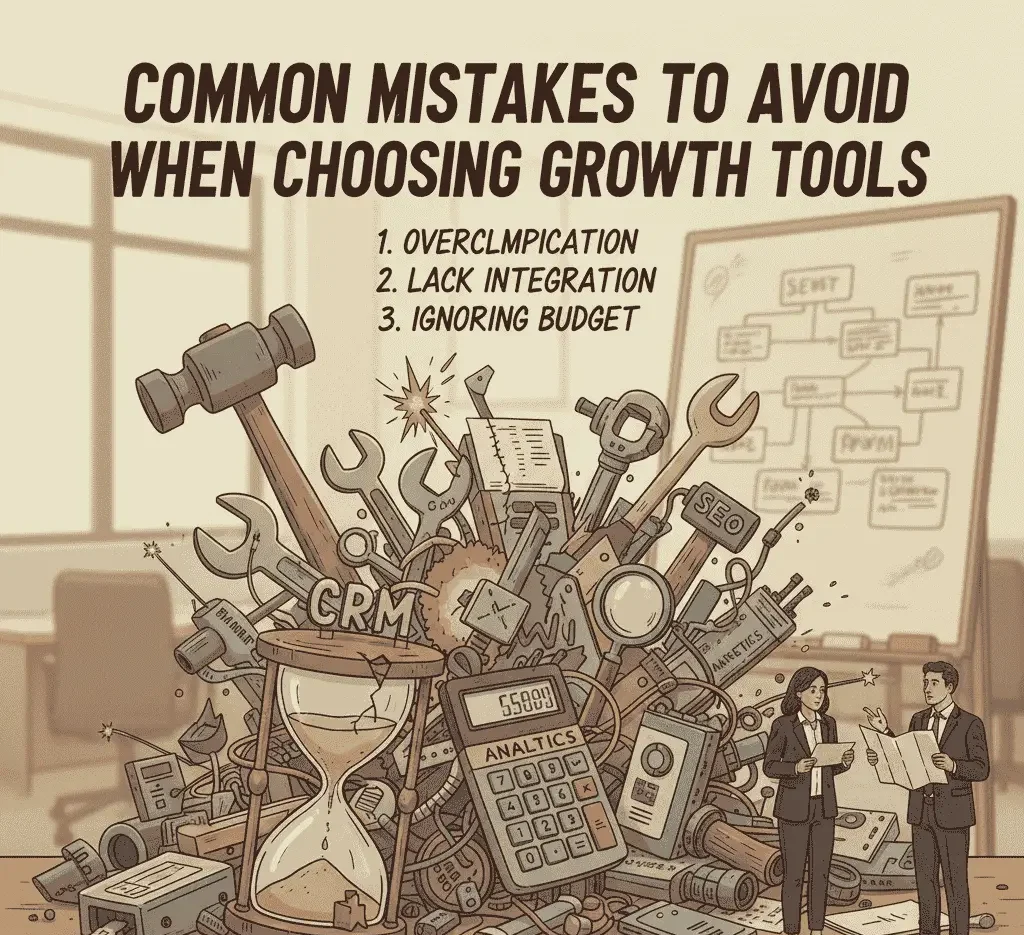
Common Mistakes to Avoid When Choosing Growth Tools
One of the biggest errors I see founders make is overcomplicating their tech stack. Tool proliferation creates more problems than it solves. Each additional platform means another login, another data source, and another potential point of failure. Start with core essentials and add specialized tools only when you’ve clearly identified specific needs.
Ignoring integration requirements leads to data fragmentation. When your marketing platform doesn’t talk to your CRM, which doesn’t connect to your analytics tool, you end up with incomplete customer pictures and manual data reconciliation.
Choosing based on features rather than actual needs wastes money and creates confusion. That advanced AI-powered feature set sounds impressive, but if you’re not using it six months later, you’ve just paid for complexity you didn’t need.
Team adoption often gets overlooked during the selection process. The most powerful platform is worthless if your team resists using it. Involve key users in the evaluation process and prioritize solutions they find intuitive.
Data security and compliance can’t be afterthoughts, especially if you’re handling customer information. Verify that platforms meet relevant standards like GDPR or HIPAA if applicable to your industry.
Implementation Best Practices
A phased rollout approach minimizes disruption. Don’t try to implement every feature on day one. Start with core functionality, let your team adapt, then gradually introduce advanced capabilities.
Team training makes or breaks adoption. Schedule dedicated onboarding sessions, create internal documentation, and designate power users who can help colleagues troubleshoot issues.
Setting up proper tracking and metrics from the beginning saves headaches later. Define what success looks like and configure your platforms to measure it accurately. Clean data beats comprehensive data every time.
Regular review and optimization should become routine. Schedule quarterly assessments to evaluate whether your tools still serve your evolving needs. Don’t be afraid to switch if something isn’t working.
Future-Proofing Your Growth Tool Stack
The technology landscape shifts constantly. Build flexibility into your approach by choosing platforms with strong API ecosystems and active development roadmaps. Solutions that embrace open standards and interoperability age better than proprietary, closed systems.
Stay informed about emerging technologies without chasing every trend. AI-powered features and automation capabilities continue advancing rapidly, but not every innovation applies to every business.
Plan for growth by understanding how platforms scale. What happens when you triple your customer base? Add international markets? Expand your product line? Your tools should accommodate these scenarios without requiring complete replacements.
Conclusion
Choosing the right growth navigate startup tools fundamentally shapes your company’s trajectory. The framework outlined here—understanding your specific needs, carefully evaluating options, avoiding common pitfalls, and implementing thoughtfully—provides a solid foundation for making these critical decisions.
Remember that there’s no universal “best” platform. The right choice depends on your industry, growth stage, team size, and specific objectives. Start with essential capabilities, choose tools that integrate well together, and remain willing to evolve your stack as your company grows.
Take action by documenting your current pain points and must-have features this week. Then begin systematically evaluating a shortlist of two or three platforms using the comparison criteria discussed here. The time invested upfront will pay dividends in efficiency, insights, and sustainable growth for years to come.
