

I. Introduction
1.1 Why Guest Posting Still Dominates in 2025–2026
Here is a fact that might surprise you: according to multiple industry surveys, websites that earn backlinks through strategic guest blogging receive up to 97% more inbound links than those that rely solely on passive outreach. That number alone should tell you everything about why publishers, SEO specialists, and content creators continue to invest heavily in contributing to established platforms.
The landscape, however, has shifted considerably. Generic article mills and low-quality blog networks have largely been wiped out by algorithm updates. What survives — and what thrives — is niche-authority publishing. Platforms that serve a well-defined, highly engaged audience and maintain genuine editorial standards are now the most valuable places to earn a backlink. That is exactly where a SERP Insight guest post enters the picture.
SERP Insight has built a reputation as a go-to resource for SEO professionals who want real, actionable insights rather than recycled fluff. Contributing here is not just about getting a link — it is about positioning yourself as a credible voice in a space that rewards expertise. In this guide, you will learn exactly how to do that.
1.2 What This Guide Covers
By the time you finish reading, you will know how to:
- Get a SERP Insight guest post accepted on the first try
- Use SERP Insight link insertion as a faster, complementary strategy
- Turn every published piece into a sustained, compounding ranking boost
II. What Is SERP Insight? (Platform Overview)
2.1 About SERP Insight
SERP Insight is a content and resource platform focused on search engine optimization, link building, and digital marketing strategy. Unlike broad-spectrum marketing blogs that cover everything from social media to paid ads, SERP Insight deliberately stays in its lane — and that focus is precisely what gives it credibility.
Its readership consists primarily of mid-to-senior level SEO practitioners, agency owners, and growth-focused marketers who already understand the fundamentals. They are not looking for beginner tutorials; they come for depth, data, and differentiated perspectives. This means a well-executed SERP Insight guest post puts you in front of an audience that can genuinely act on what you write — whether that means hiring you, citing your work, or linking back to your site organically.
2.2 Types of Contributions Accepted
SERP Insight accepts two main types of external contributions:
- Guest posts — original, long-form articles written by external contributors and published under your byline with an author bio
- SERP Insight link insertion — editorial link placements added into already-published, indexed articles on the site
It is also worth understanding the difference between sponsored content and organic editorial. Sponsored pieces are clearly disclosed and typically do not carry the same topical authority signals as purely editorial contributions. For maximum SEO benefit, aim for the organic editorial route whenever possible.
2.3 Why SERP Insight Is Worth Your Effort
The value of a backlink is only as strong as the domain it comes from. SERP Insight maintains strong domain metrics, a clean backlink profile, and an engaged readership — three factors that combine to make every link placed here genuinely meaningful for search engine rankings. The platform’s do-follow link policy on editorial guest posts means PageRank equity flows directly to your linked page, not into a dead end.
Community trust signals also matter. Articles that earn comments, social shares, and repeat visits send behavioral signals that reinforce the authority of the content — and by extension, the authority of your linked destination.
III. Guest Post Guidelines & Requirements
3.1 Content Topics & Categories Accepted
SERP Insight focuses tightly on the SEO and digital marketing space. Topics that consistently perform well include:
- Technical SEO and SERP feature optimization
- Keyword research methodologies and search intent analysis
- On-page optimization strategies and content structuring
- Link building, backlink outreach, and digital PR
- Content marketing, case studies, and tool comparisons
Topics to steer clear of: thin content pieces that simply summarize what everyone already knows, overly promotional articles that read like sales pages, and anything outside the core SEO/digital marketing domain.
3.2 Content Quality Standards
The editorial bar here is legitimately high, and that is a feature, not a bug. Because the platform enforces standards, the links you earn carry real weight. Practically speaking, this means:
- Every claim should be backed by data, case studies, or cited research
- Original insights and first-hand experience are strongly preferred over synthesized summaries
- No AI-generated filler — editors can tell, and so can the audience
- Proper internal and external linking adds credibility and helps readers go deeper
3.3 Formatting & Structural Requirements
Follow a clean heading hierarchy: H1 for the title, H2 for major sections, H3 for subsections. Images, infographics, or data visualizations are encouraged where they genuinely add value — not just for visual padding. Your submission should also include a meta title, meta description, and a properly formatted author bio with no more than the allowed number of links.
3.4 Editorial Policies
The review process for a submitted article typically runs one to three weeks. Sponsored or affiliate content requires disclosure per standard editorial transparency practices. Author bios generally allow one to two backlinks — confirm the current limit directly with the editorial team before submitting, as policies can be updated.
IV. How to Submit a SERP Insight Guest Post (Step-by-Step)
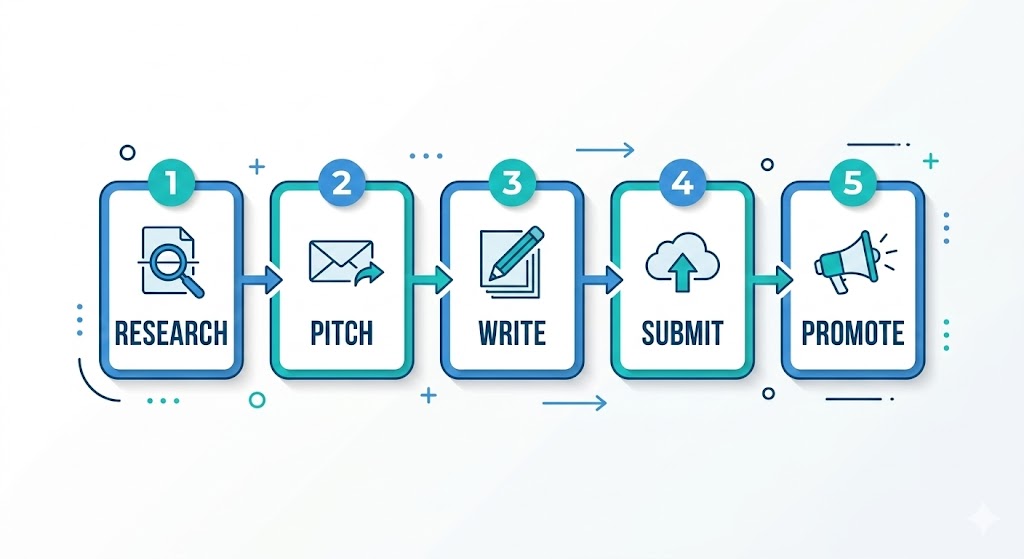
This is the section you came for. Follow these steps methodically and your chances of getting a SERP Insight guest post accepted increase significantly.
Step 1 — Research Before You Pitch
Spend at least an hour inside SERP Insight before writing a single word of your pitch. Read the top-performing articles. Note the format, the depth, the angle they take on familiar topics. Then open a tool like Ahrefs, SEMrush, or even Google Search Console and identify gaps — topics the platform has not covered recently, subtopics that deserve a fresh take, or angles that existing articles only touch on superficially.
The goal is to arrive at your pitch knowing exactly what you bring that is not already there.
Step 2 — Craft a Winning Pitch
A strong pitch email is short, specific, and demonstrates genuine familiarity with the platform. Structure it like this:
- Subject line: Clear and topic-specific (“Pitch: [Working Title] — A Data-Driven Look at [Topic]” works well)
- Opening hook: One or two sentences explaining why this topic matters right now
- Unique angle: What makes your take different from what already exists on the site
- Quick authority signal: A sentence about your credentials or a link to relevant published work
- Brief outline: Three to five bullet points showing the content structure
Pitches get rejected most often because they are generic, they propose a topic already covered, or they fail to demonstrate any familiarity with the publication. Avoid all three.
Step 3 — Write the Article
Once your pitch is approved, write with the reader — not the algorithm — as your primary audience. That said, smart keyword placement still matters. Weave your primary and secondary terms naturally throughout the piece. Use LSI keywords like “backlink outreach,” “domain authority,” “contributor guidelines,” “niche edits,” and “editorial links” to build topical depth without stuffing.
For linking strategy: two to four internal links to existing SERP Insight content, plus two to three external links to genuinely authoritative sources (think Ahrefs blog, Moz, Google’s official documentation), strikes the right balance. Anchor text should be descriptive but not over-optimized.
Step 4 — Submit & Follow Up
Submit your final draft through the designated submission form or editorial email. If you haven’t heard back within two weeks, one polite follow-up message is entirely appropriate. Keep it brief: reference your original pitch, confirm continued interest, and ask if there’s anything they need from you.
If your submission is rejected, read the feedback carefully — it is usually specific and actionable. Revise accordingly and consider resubmitting, or use the feedback to sharpen your next pitch.
Step 5 — After Publication: Maximize Your ROI
Publication is not the finish line. Once your SERP Insight guest post goes live, promote it actively across your social channels, newsletter, and any communities you participate in. These amplification signals reinforce the content’s relevance and can accelerate indexing of your linked pages.
Build secondary links pointing to the published article itself — a few high-quality references from your own site or from other platforms you contribute to will compound the equity flowing toward your target page. Then track ranking movements in Google Search Console over the following four to twelve weeks.
V. SERP Insight Link Insertion — A Strategic Alternative
5.1 What Is Link Insertion (Niche Edit)?
A niche edit — also called a link insertion — involves adding a contextual backlink into an article that has already been published, indexed, and is actively ranking. Rather than creating a new page that needs to earn its own authority from scratch, you are tapping into the existing trust and PageRank of a mature piece of content.
The practical advantage is speed. A new guest post can take weeks to rank; an insertion into an already-ranking article can send authority signals to your target page almost immediately after the link goes live.
5.2 How SERP Insight Link Insertion Works
SERP Insight link insertion follows a clear editorial process. First, you identify existing articles on the platform that are already ranking for terms closely related to your target page. The contextual fit is critical — the surrounding paragraph should genuinely benefit from your linked resource, not just tolerate it.
Reach out to the editorial team with a specific proposal: identify the article, indicate where the link fits naturally, and explain the value it adds to that particular passage. Vague requests get ignored; specific, value-first proposals get considered.
5.3 When to Choose Link Insertion Over Guest Posting
Both strategies have their place in a well-rounded link building plan. Here is a simple way to think about it:
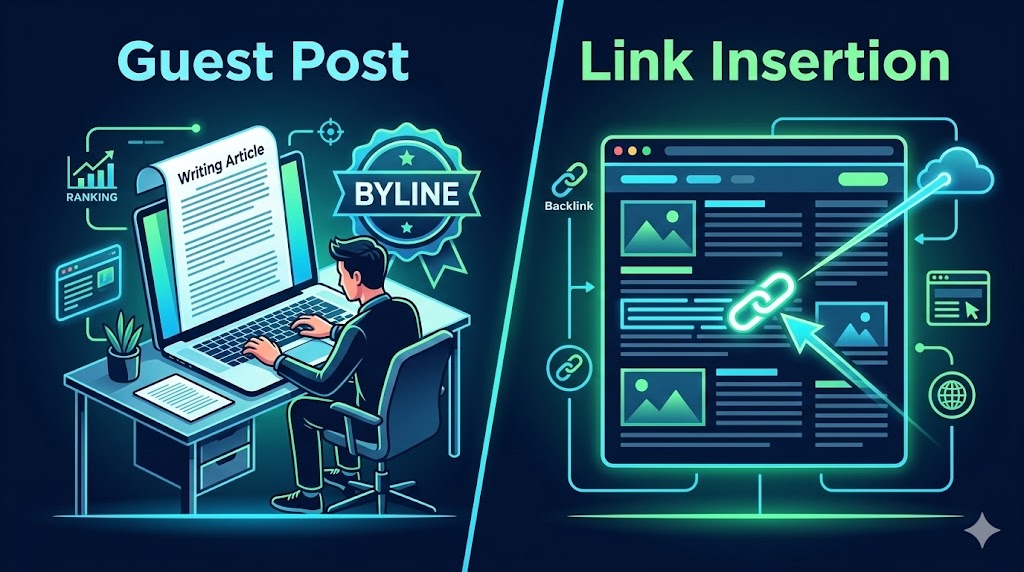
| Guest Post | Link Insertion |
| Builds brand awareness and author authority | Faster turnaround, leverages existing PageRank |
| Best when you have time and unique insights to share | Best when targeting niche-specific, already-ranking articles |
| Earns byline credibility and social shares | Older articles often carry more accumulated authority |
5.4 Best Practices for SERP Insight Link Insertion
- Match anchor text to your target keyword naturally — partial match or branded anchors are safer than exact-match
- Ensure the paragraph surrounding your link genuinely aligns with your destination page’s topic
- Avoid over-optimized or repetitive anchor text across multiple insertions — diversify
- Monitor the placement using a backlink tracking tool like Ahrefs or Majestic to confirm the link stays live and indexed
VI. SEO Benefits of Publishing on SERP Insight
6.1 Direct Ranking Benefits
The most immediate benefit of a SERP Insight guest post is the direct PageRank equity transferred to your linked page. When a high-DA platform with a clean, relevant backlink profile links to your content, it signals to Google that your page is worth ranking. Referral traffic is a secondary benefit — the audience that reads SERP Insight is exactly the kind of sophisticated, engaged crowd that is likely to explore your site further, subscribe to your newsletter, or become a long-term contact.
Brand SERP improvement is an underrated bonus. The more authoritative content that mentions your name or brand appears in Google’s index, the more your Brand SERP fills out with varied, credible results — which reinforces trust with anyone who searches for you directly.
6.2 Topical Authority Building
Google’s E-E-A-T framework — which stands for Experience, Expertise, Authoritativeness, and Trustworthiness — rewards content and authors who demonstrate genuine depth in a specific domain. Publishing repeatedly on a respected, niche-specific platform like SERP Insight builds exactly this kind of topical authority.
Internal linking from multiple SERP Insight pages compounds this effect. When several articles on the platform reference your work or link to your site in a relevant context, it sends consistent signals about your entity’s relevance within the SEO niche.
6.3 Long-Term Compounding Returns
Evergreen content is the gift that keeps giving. An article published today on SERP Insight can continue earning organic traffic, social shares, and secondary backlinks for years — all of which translate into ongoing authority transfer to your linked pages. Writers who are cited by other contributors in future articles also benefit from an expanding web of secondary links they did not have to actively build.
VII. Common Mistakes to Avoid
7.1 Pitch Mistakes
The fastest way to get your pitch deleted without a reply is to send a template that could have been written for any website on the internet. Editors receive dozens of outreach emails per week and they can identify a generic pitch in five seconds. Personalize every single message you send. Reference a specific article you read, explain why your topic complements it, and make it obvious that you have spent time on the platform.
- Generic, non-personalized pitch emails
- Proposing topics already covered without a meaningfully fresh angle
- Skipping competitor content analysis before reaching out
7.2 Content Writing Mistakes
Once you get the green light, the most common failure mode is writing an article that reads more like a brand brochure than an educational resource. SERP Insight readers are there to learn, not to be sold to. Keep your brand mentions minimal and contextually justified.
- Over-promoting your own services within the article body
- Thin content without original data, examples, or lived experience
- Missing or incorrect source citations that undermine credibility
7.3 Link Building Mistakes
On the link building side, over-optimized anchor text remains one of the clearest algorithmic red flags in Google’s playbook. If every link pointing to your page uses the exact same keyword phrase, that pattern looks unnatural — because it is. Vary your anchors, choose contextually relevant articles for insertions, and never assume that all links on any given platform automatically pass equity. Always verify the nofollow/dofollow status of any link you earn.
VIII. Expert Tips to Get Accepted Faster
These are the tactics that separate contributors who get published from those who stay in draft limbo indefinitely.
- Study the top ten most-shared SERP Insight articles and reverse-engineer their structure, angle, and depth before writing your pitch
- Reference SERP Insight’s own published content in your pitch — it signals genuine familiarity and shows you are not mass-blasting
- Propose data-driven or original research pieces wherever possible — editors prioritize unique insight over synthesized summaries
- Build a relationship through social media engagement or newsletter interaction before cold-pitching — warm outreach converts significantly better
- Include a short content outline in your initial pitch to reduce editorial back-and-forth and demonstrate that you already have a clear plan
- Offer to create a custom graphic or original infographic to accompany your submission — this adds perceived value and reduces production work for the editorial team
IX. Frequently Asked Questions (FAQ)
What is a SERP Insight guest post?
A SERP Insight guest post is an original article written by an external contributor and published on the SERP Insight platform under your byline. It typically includes an author bio with one to two backlinks and must meet the platform’s editorial standards on quality, originality, and topical relevance.
How do I submit a guest post to SERP Insight?
Start by researching what is already published, then send a personalized pitch via their submission form or editorial email. Once your topic is approved, write the article following their guidelines and submit the final draft. The full process from pitch to publication usually takes one to three weeks.
What is SERP Insight link insertion?
SERP Insight link insertion refers to placing a contextual backlink inside an already-published, indexed article on the SERP Insight website. It is a faster alternative to guest posting for acquiring high-authority backlinks from content that is already earning traffic and trust from search engines.
Is SERP Insight a do-follow site?
Editorial guest posts on SERP Insight are generally published with do-follow links, meaning PageRank equity flows to your linked destination. However, link policies can change, and sponsored or link insertion placements may be treated differently. Always confirm current policy directly with the editorial team before building your strategy around an assumed link type.
How long does it take for a SERP Insight guest post to rank?
Ranking timelines depend on the competition level of your target keywords, the domain authority of your linked page, the quality of the content, and how aggressively you promote the published piece. In most cases, contributors begin to see initial ranking movements within four to twelve weeks of publication. Continued link building to the published article can accelerate this timeline.
Can I contribute multiple articles to SERP Insight?
Yes, and doing so is actually one of the most effective ways to build topical authority in the SEO niche. Repeated contributions under your byline reinforce your author profile, increase the number of internal links referencing your work, and create a compounding effect on your brand’s presence in both search results and industry conversations.
X. Conclusion
10.1 Key Takeaways
Contributing to SERP Insight — whether through a full SERP Insight guest post or a targeted SERP Insight link insertion — is one of the most efficient ways to earn high-quality backlinks in the SEO niche. The platform’s editorial standards ensure that every link you earn here carries genuine weight with Google’s algorithm, not just on paper.
- Guest posting builds brand authority, topical credibility, and sustained referral traffic
- Link insertion offers a faster, targeted path to PageRank equity from already-ranking content
- Both strategies compound over time when executed consistently and paired with quality on-page content
- Following Google’s E-E-A-T principles throughout your content creation process is not optional — it is the foundation of everything that works long-term
10.2 Call to Action
Start with your pitch. Open SERP Insight right now, read three to five recent articles in your area of expertise, identify a gap, and write one targeted pitch email today. If time is a constraint, reach out to explore the link insertion option as a faster entry point.
Bookmark this guide and return to the step-by-step checklist in Section IV each time you prepare a new submission. And if you are not yet subscribed to SERP Insight’s newsletter, do that too — staying close to the platform’s content direction is one of the simplest ways to keep your pitches relevant and timely.
The SEO landscape rewards consistency and genuine expertise above everything else. Submit your first SERP Insight guest post, measure the results, refine your approach, and build from there.
