

The digital landscape has transformed dramatically over the past few years, and video content now dominates how people consume information online. Whether you’re a content creator, marketer, or business owner, understanding video SEO optimization is no longer optional—it’s essential for success. With billions of videos competing for attention across platforms like YouTube and Google, knowing how to make your content discoverable can mean the difference between going viral and getting lost in the algorithm.
This comprehensive guide will walk you through everything you need to know about optimizing your video content for search engines in 2026. From technical implementations to creative strategies, you’ll discover actionable tactics that actually move the needle on your video rankings.
What is Video SEO Optimization?
At its core, video SEO optimization refers to the process of improving your video content’s visibility in search engine results. Unlike traditional text-based search engine optimization, video optimization requires a unique approach that considers both how search engines crawl video content and how viewers engage with it.
When you upload a video to platforms like YouTube or embed it on your website, search engines need specific signals to understand what your content is about. They can’t watch videos the way humans do, so they rely on metadata, engagement metrics, and technical elements to determine relevance and quality.
The beauty of video SEO optimization in 2026 is the dual opportunity it presents. Your videos can rank not only on YouTube—the world’s second-largest search engine—but also appear in Google’s search results, Google Discover, and even featured snippets. This means a single well-optimized video can capture traffic from multiple sources simultaneously.
Think of it this way: when someone searches for “how to change a tire,” Google doesn’t just show text articles anymore. Video results often dominate the first page because they provide a better user experience for instructional content. If your video isn’t optimized, you’re missing out on this valuable real estate.
Pre-Upload Video SEO Optimization
Before you even upload your video, there’s crucial groundwork to complete. Smart creators know that video SEO optimization begins in the planning phase, not after publication.
Keyword Research for Video Content
Finding the right keywords is the foundation of any successful video strategy. Start by using tools specifically designed for video content discovery. YouTube’s autocomplete feature is surprisingly powerful—simply type your topic into the search bar and note the suggestions that appear. These represent real queries people are actively searching for.
Pay attention to search intent. Are people looking for tutorials, reviews, comparisons, or entertainment? A video optimizer approach means matching your content format to what viewers actually want. For example, if searches include “how to” or “tutorial,” viewers expect step-by-step instruction, not a casual vlog.
Analyze your competitors’ top-performing videos. Look at their titles, descriptions, and which videos get the most views. This competitive intelligence reveals gaps in the market and opportunities for you to create something better or approach the topic from a fresh angle.
Creating SEO-Friendly Video Content
Content quality matters more than ever in 2026. Search algorithms have become sophisticated enough to measure viewer satisfaction through engagement signals. Your video needs to deliver on whatever promise your title makes, or viewers will click away—hurting your rankings.
Structure your content with clear segments. Viewers appreciate knowing what’s coming, and you can leverage this structure when adding timestamps to your description. Hook viewers in the first 10 seconds with a compelling reason to keep watching. Whether it’s a bold statement, intriguing question, or preview of results, make those opening moments count.
Video length should match the topic’s complexity. Don’t artificially inflate a 3-minute topic into 10 minutes, and don’t rush through complex subjects. The goal is maximum value delivery in the minimum necessary time.
Technical Video Optimization
Technical quality sends trust signals to both viewers and algorithms. In 2026, there’s no excuse for poor video quality—viewers expect at least 1080p resolution, and 4K is becoming standard for professional content.
File naming matters more than most creators realize. Before uploading, rename your video file to include your target keyword. Instead of “VID_20260126.mp4,” use “video-seo-optimization-guide.mp4.” This small detail helps search engines understand your content before processing any metadata.
Choose the right format for your platform. MP4 with H.264 codec remains the gold standard for compatibility and quality balance across most platforms.
On-Page Video SEO Optimization
Once your video is ready, the real video SEO optimization work begins. Every element you add to your upload contributes to how search engines interpret and rank your content.
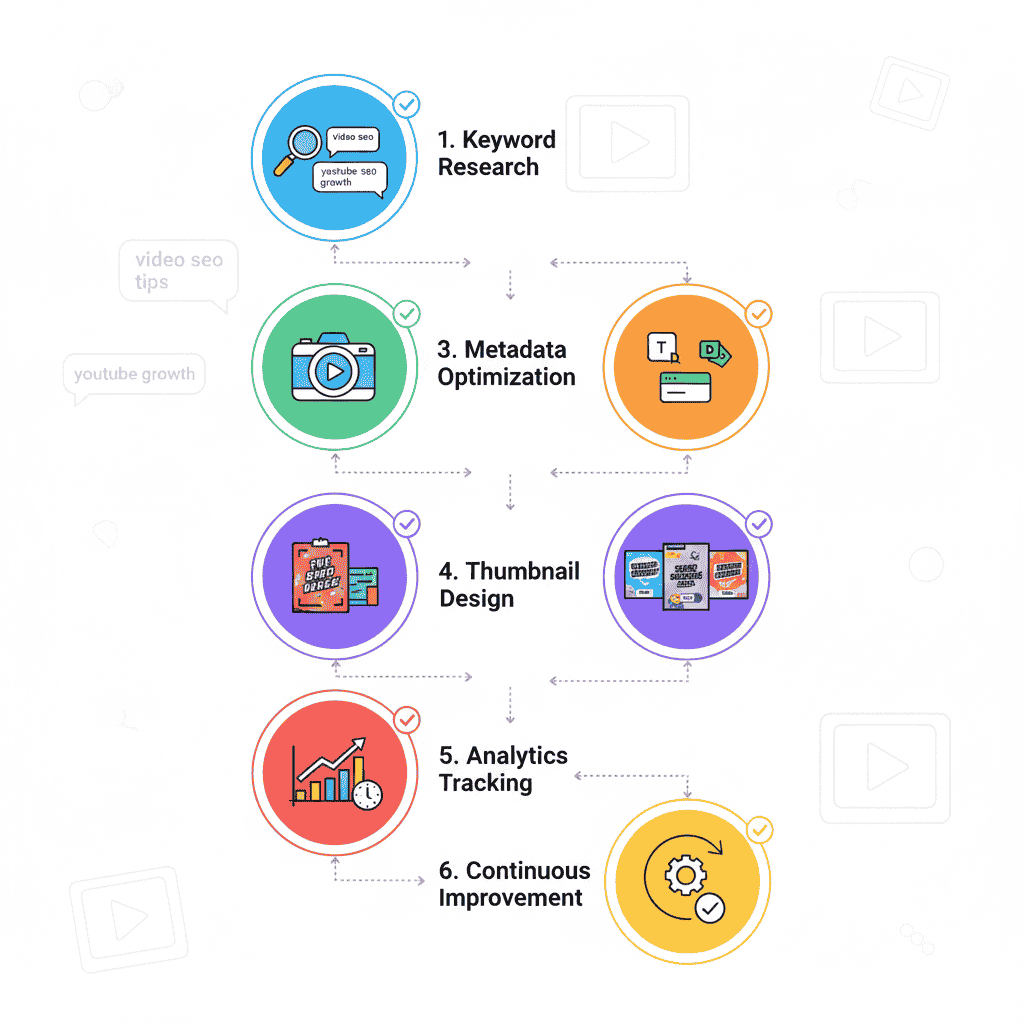
Title Optimization
Your video title is perhaps the single most important ranking factor you control. Place your primary keyword near the beginning of the title naturally. A video optimizer knows that “Video SEO Optimization: Complete 2026 Guide” performs better than “Complete 2026 Guide for Video SEO Optimization.”
Keep titles under 60 characters when possible to prevent truncation in search results. Make them compelling enough to earn clicks while accurately representing your content. Misleading clickbait might get initial views, but poor retention will tank your rankings.
Video Descriptions
The first 150 characters of your description appear in search previews, so front-load this section with your most important information and keywords. Write descriptions that would genuinely help someone decide if your video answers their question.
Include your target keyword naturally within the first two sentences, then expand with comprehensive context about your video’s content. Add relevant timestamps for major sections—this enhances user experience and can help your video appear in featured snippets for specific queries.
Smart creators include links to related resources, their website, and social profiles. Each description is an opportunity to drive traffic beyond just video views.
Tags and Categories
Strategic tag selection helps YouTube understand your video’s context and suggests it alongside similar content. Use a mix of broad tags (like “SEO”) and specific long-tail tags (like “video SEO optimization for beginners”). Include variations of your main keyword and related terms viewers might search.
Don’t stuff tags with irrelevant keywords. YouTube’s algorithm detects this manipulation and may penalize your video. Focus on 5-10 highly relevant tags rather than maximizing the character limit with marginally related terms.
Select the most appropriate category for your content. This helps YouTube recommend your video to viewers who consistently watch content in that category.
Thumbnails
Custom thumbnails are non-negotiable for serious creators. Your thumbnail works alongside your title to earn clicks, directly impacting your click-through rate—a crucial ranking signal.
Use high-contrast colors, readable text overlays, and close-up facial expressions when relevant. Test different thumbnail styles to see what resonates with your audience. Some niches respond better to text-heavy thumbnails, while others prefer minimal design with strong imagery.
Closed Captions and Transcripts
Accurate captions provide multiple video SEO optimization benefits. Search engines can crawl caption text, giving them more context about your content. Captions also make your content accessible to deaf and hard-of-hearing viewers, plus people watching without sound in public spaces.
Upload professional transcripts rather than relying solely on auto-generated captions. While YouTube’s automatic captioning has improved, human-reviewed transcripts are more accurate and can include proper keyword placement.
Consider including a full transcript in your video description or on a linked webpage. This creates additional text content for search engines to index.
YouTube-Specific SEO Optimization
YouTube’s algorithm prioritizes videos that keep viewers on the platform longer. Understanding these platform-specific factors helps you optimize beyond basic SEO principles.
Watch time and audience retention are your most important metrics. YouTube measures not just total views, but how much of your video people actually watch. A 10-minute video where viewers watch all 10 minutes will outrank a 10-minute video where most people leave after 2 minutes.
Encourage engagement through strategic calls-to-action. Ask viewers to comment with their thoughts, share the video if they found it helpful, and subscribe for future content. YouTube interprets this engagement as quality signals.
